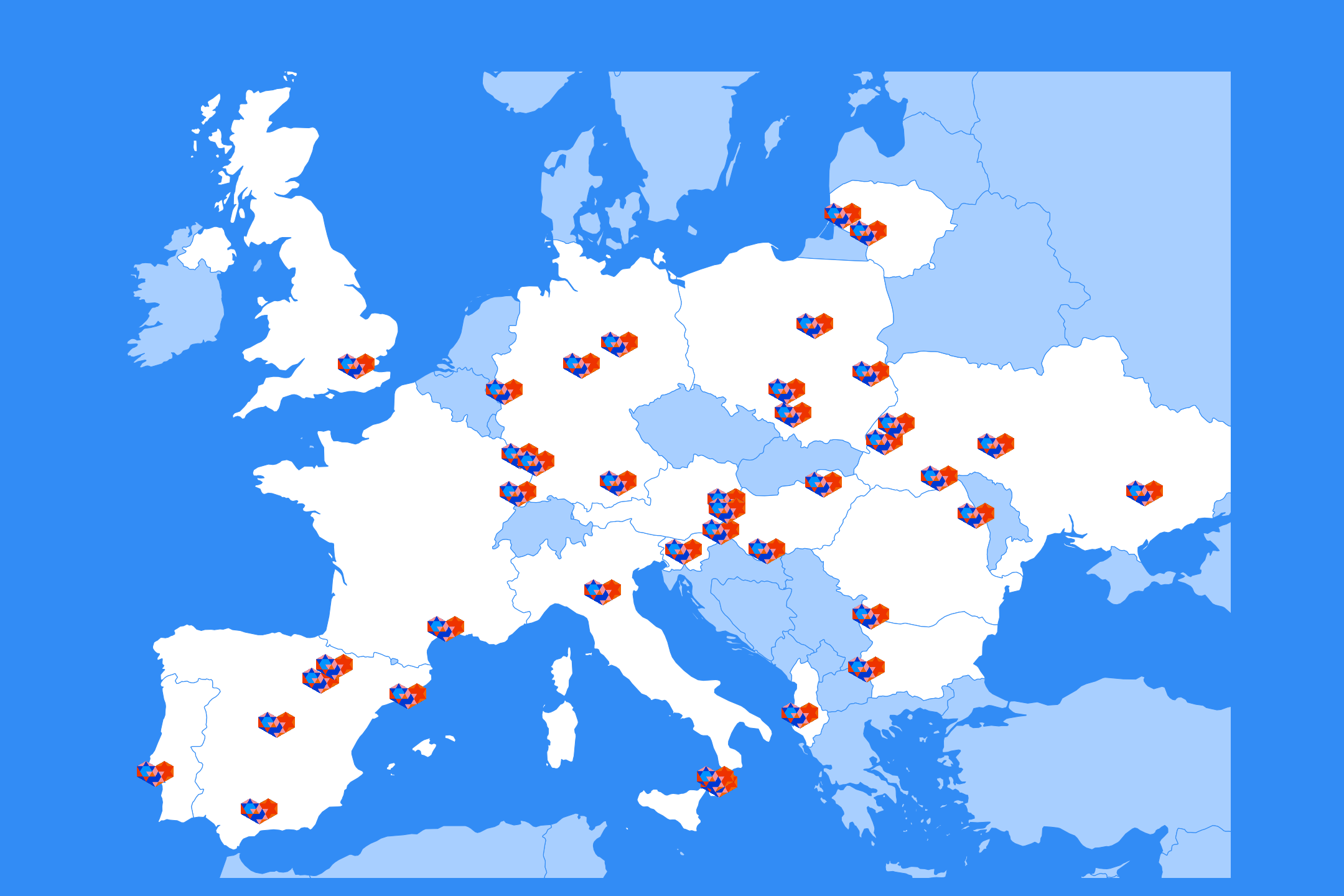
Hannover, 17 September 2026 – Around 28 institutions gathered on 17 September 2026 at Gedenkstätte Ahlem for the conference “Erinnerungskultur in der Zeitenwende – Digitale Quellen in der vernetzenden Bildungsarbeit” (Remembrance Culture at a Turning Point – Digital Sources in Networked Education). The event was organised by Global Partnership Hannover e.V., Gedenkstätte Ahlem and AEPJ, as part of the European Memorial Data Space (EMDS) project led by Jewish Heritage Network and co-funded by the European Union.
The programme opened on the evening of 16 September with a staged walking tour along Hannover’s Stolpersteine, led by Kersten Flenter, which linked the stories of individual victims to places across the city. An informal get-together followed.
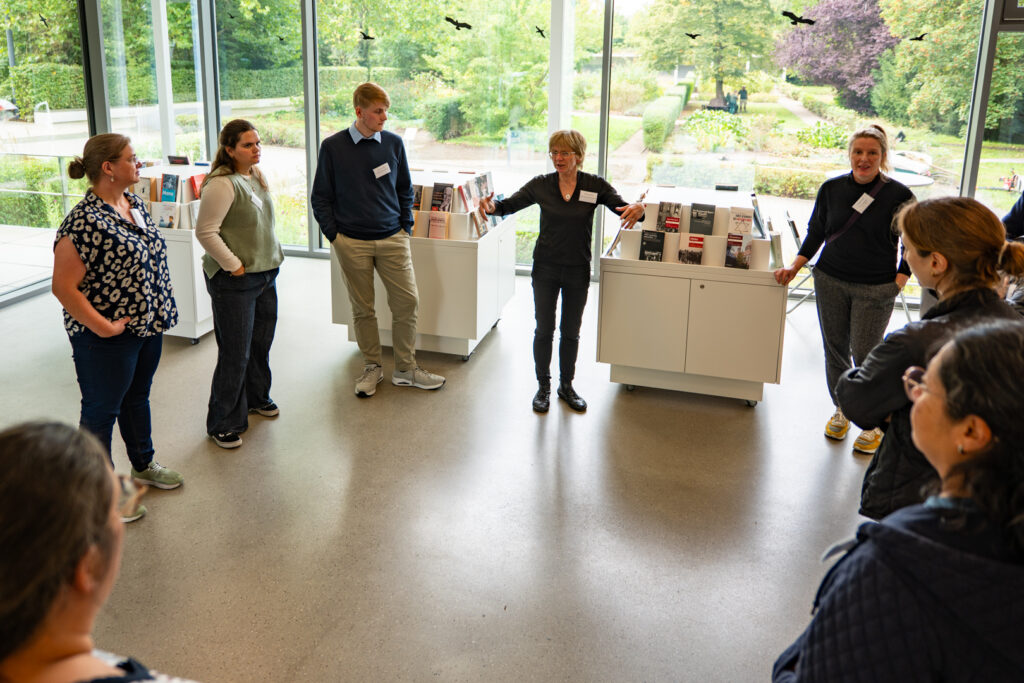
On the conference day, Pavel Kats (Jewish Heritage Network) and Marc Francesch (AEPJ) presented the EMDS project online. The morning focused on digital access to testimony and research: Maximilian Schnell explained how survivor interviews are indexed through transcripts, sequences and keywords; Anna Menny presented the #DigitalJewishHistory work of the Institut für die Geschichte der deutschen Juden (IGdJ); and PD Dr. Karsten Uhl showed how KZ-Gedenkstätte Neuengamme uses AI to index survivor accounts in depth. A plenary discussion moderated by Rubina Kamal (Gedenkstätte Ahlem) then addressed the legal, technical and ethical conditions for digitising and using Nazi-era sources.
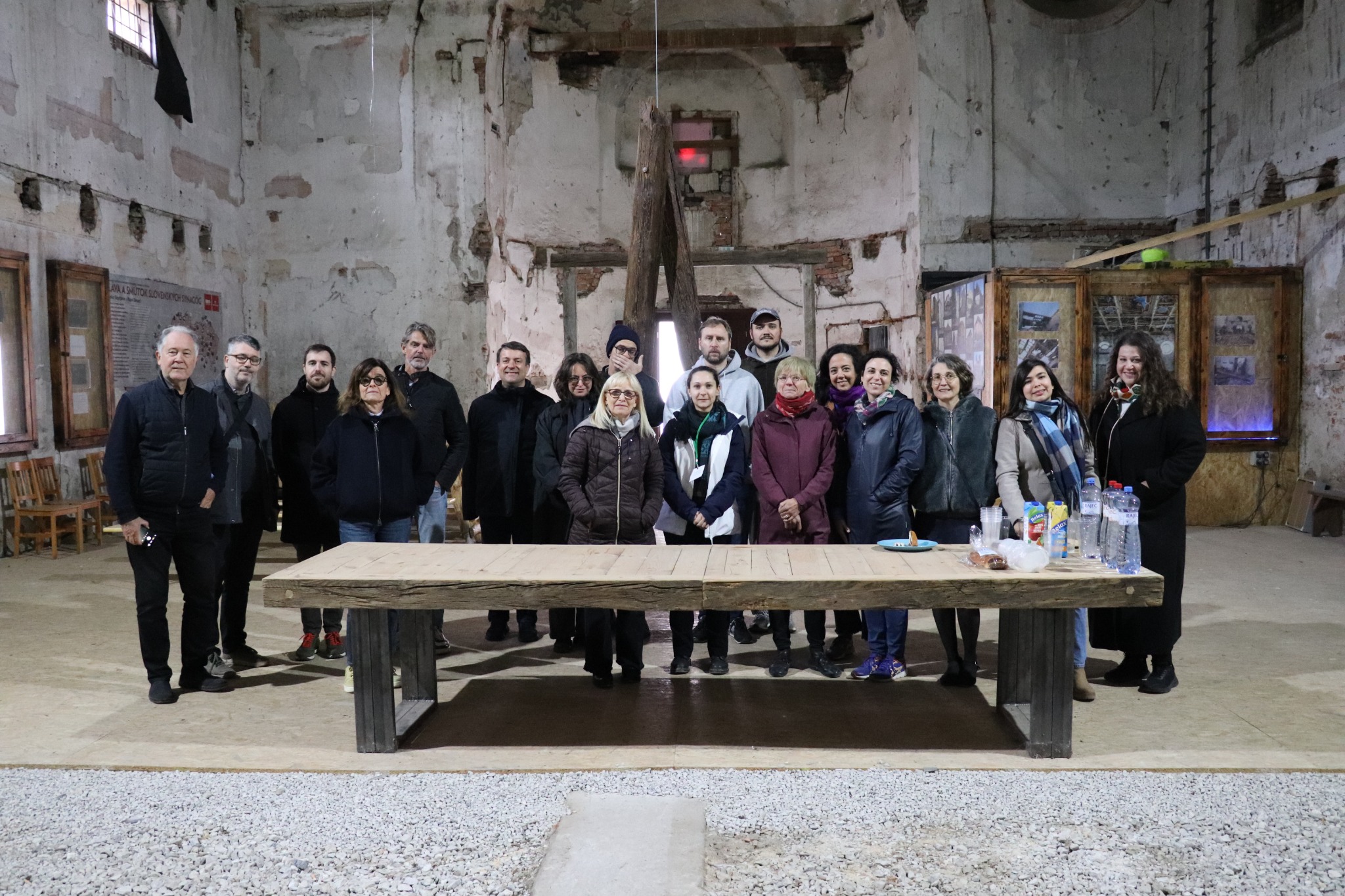
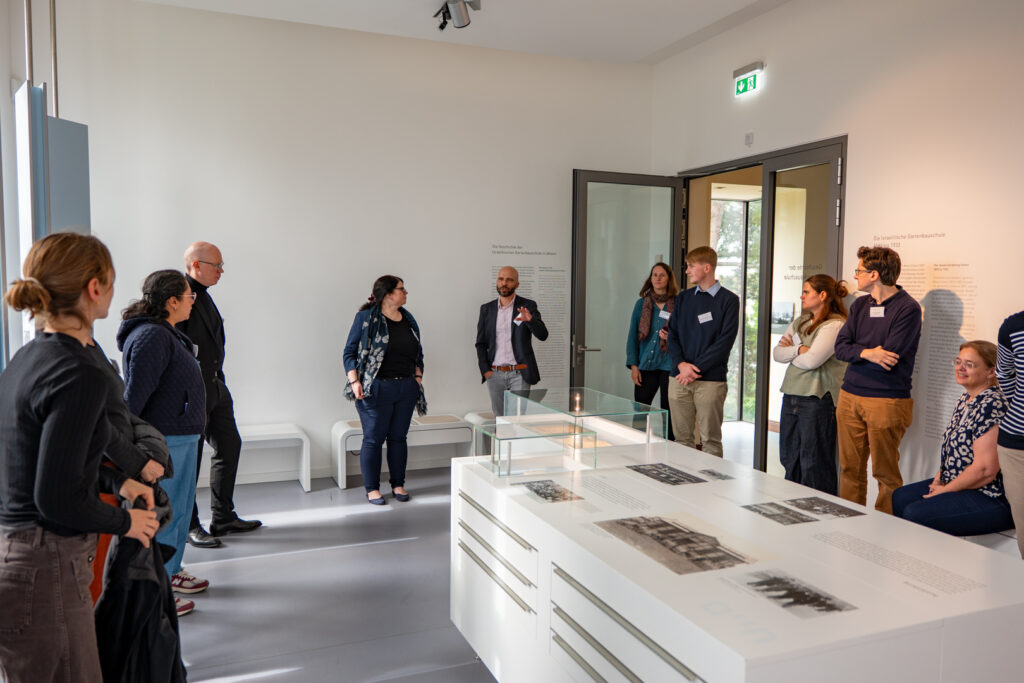
After a short guided tour of the memorial, the afternoon turned to education. Aljoscha Semeraro (Dokumentations- und Lernort Bückeberg) and Dr. Thomas Sebastian Köhn (Leuphana Universität Lüneburg) compared original historical recordings with new audio productions based on historical sources. Speakers from the Niedersächsisches Landesarchiv, the »Euthanasie«-Gedenkstätte Lüneburg and Gedenkstätte Bergen-Belsen shared how they use digital formats and social media, while Dr. Daniel Milch (Gymnasium Limmer) and Stefan Wilbricht (KZ-Gedenkstätte Moringen) discussed how to work with digitised materials in classrooms and at memorials amid growing political polarisation.
Shaun Hermel (Gedenkstätte Ahlem) and Anke Biedenkapp (Global Partnership Hannover) closed the day with a synthesis under the question “Digitised remembrance culture – quo vadis?”. Participants included memorial sites, archives, universities, libraries, schools and civil-society initiatives, among them the Stiftung niedersächsische Gedenkstätten, TIB – Leibniz Information Centre for Science and Technology, Goethe-Universität Frankfurt, the Institut für Zeitgeschichte München – Berlin, Centropa and the Stadtarchiv Hannover.