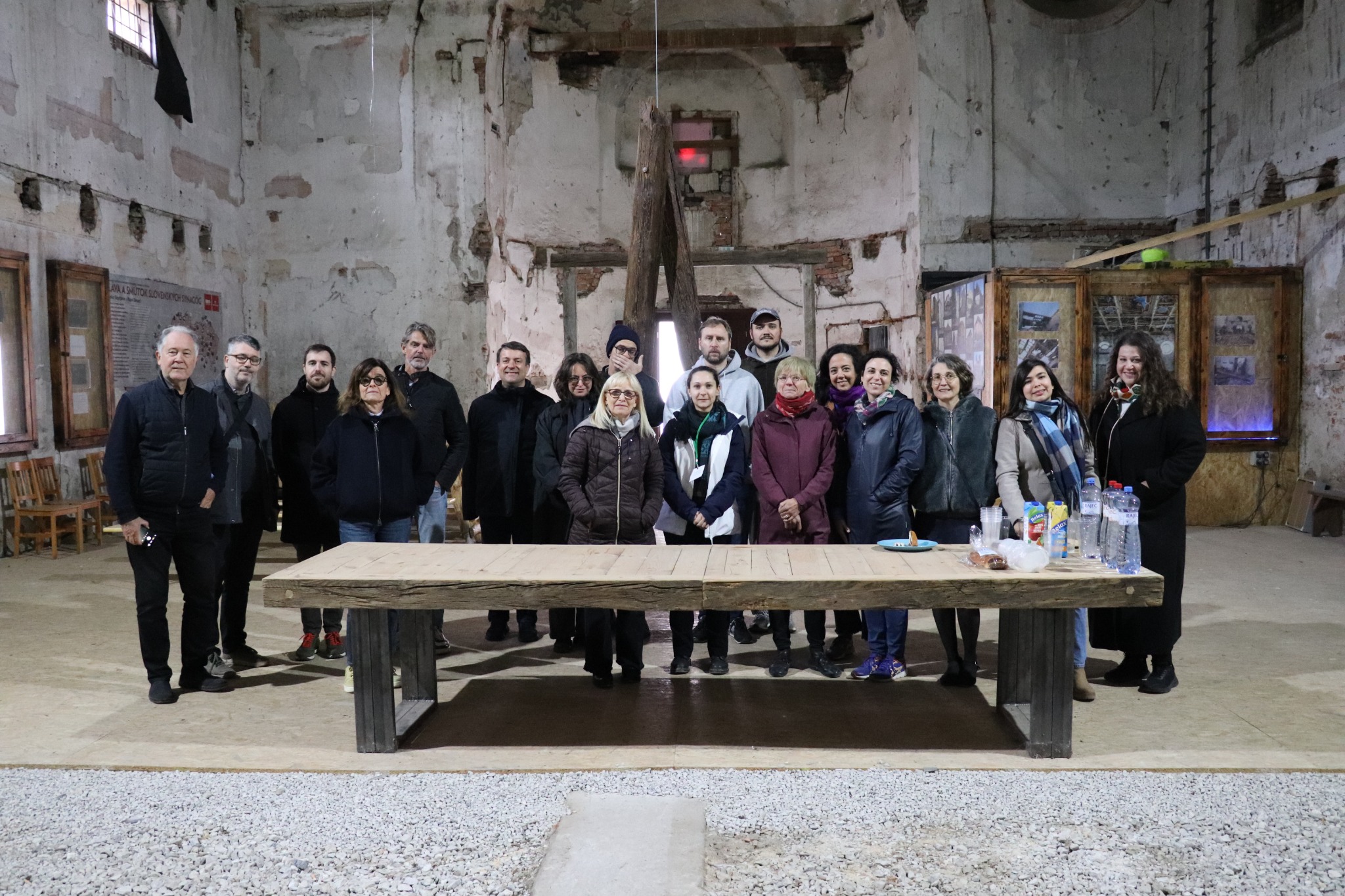
Ferrara, 9 November 2026 – The first training of the MiDorLeDor Europe Toolbox (MDLDE_TLBX) opened yesterday in Ferrara, Italy, hosted by Fondazione per i Beni Culturali Ebraici in Italia. It brings together 17 participants from Bosnia & Herzegovina (Hagada Association), France (trainers representing AEJM), Germany (Centropa), Italy (FBCEI), Moldova (CRIO Agudat), Poland (Taube Center for Jewish Life & Learning), Spain (Federation of Spanish Jewish Communities), and Ukraine (Lviv Tourism Development Center) for three days on tools to develop trainings fostering the innovation on Jewish heritage interpretation and storytelling. The programme continues in Ferrara on Tuesday and ends in Venice on Wednesday 11 November.
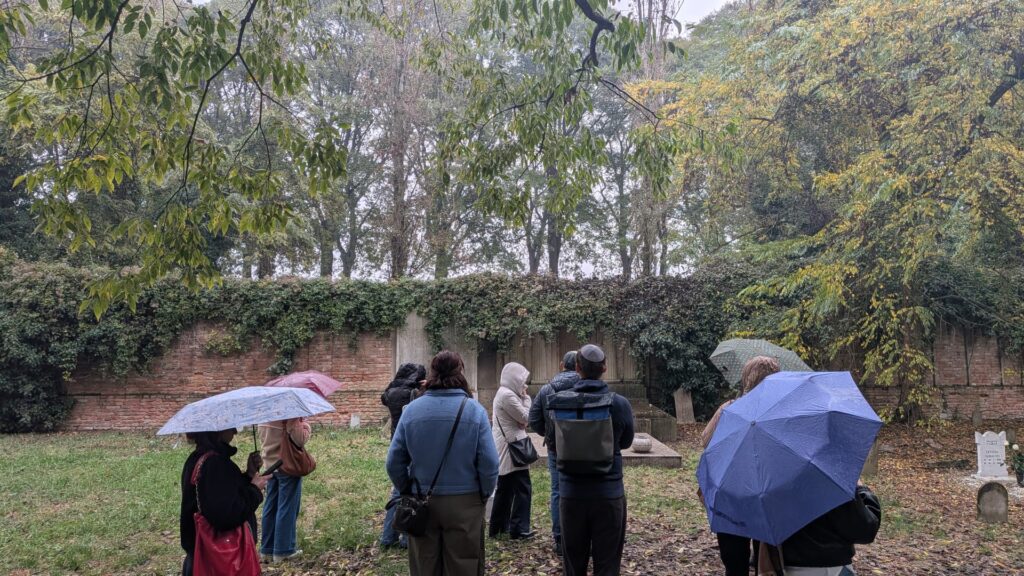
The day began at the Jewish Community of Ferrara, with “Inside out the Jewish Ferrara”. Andrea Pesaro and Shmuel Lampronti, board members of Ferrara’s Jewish Community, welcomed and guided participants through the community’s synagogues and the former Ghetto. Participants then went to the Jewish Cemetery of Ferrara for the session with Valeria Milano and Michelle Nahum Sembira, who brought key insights showcasing the development of storytelling from stories of individuals of the community along its history.
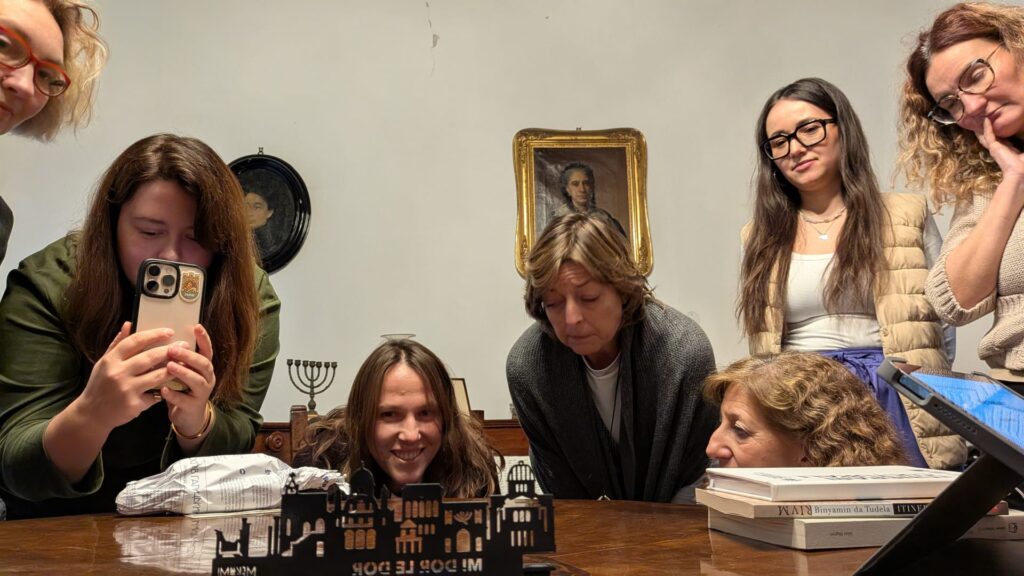
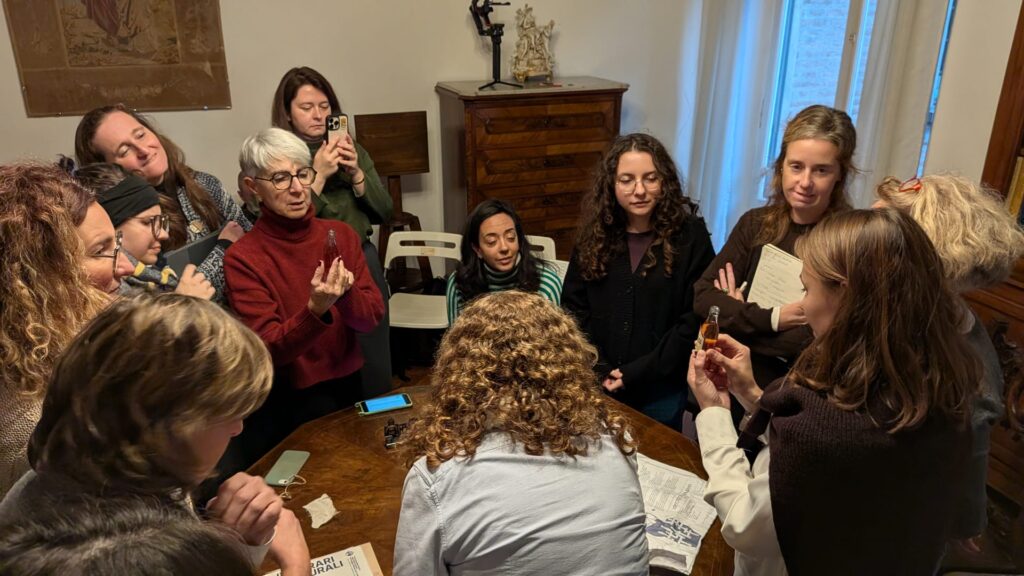
In the afternoon, a meet-and-greet session driven through the Object based learning methodology gave participants a chance to introduce themselves and get to know each other. The workshop let every institution participating to contribute to the discussion starting from an item or element connecting them to the Jewish legacy they work with.
Luca Baraldi, Scientific Advisor of AEPJ, followed with the talk “The unwritten city. Rethinking places through Jewish history.” Taking Ferrara as a case study, he argued that heritage is shaped not only by places but by the people and institutions that define its narratives, and showed how the history of Jewish communities mirrors Europe’s geopolitical evolution. Baraldi stressed the power of personal stories to connect with audiences and have a transformative impact, a purpose that must be built into our narratives from the outset. One key to breaking with established readings of our surroundings, he concluded, is to look for what is still waiting to be discovered, starting with the place we come from.
The day closed with “Stories and Recipes”, a Jewish Italian cooking workshop at KONBINI LAB.
On Tuesday 10 November, the training moves to the Museo Nazionale dell’Ebraismo Italiano e della Shoah – MEIS, which participants will study as a case study in interpreting Italian Jewish heritage.