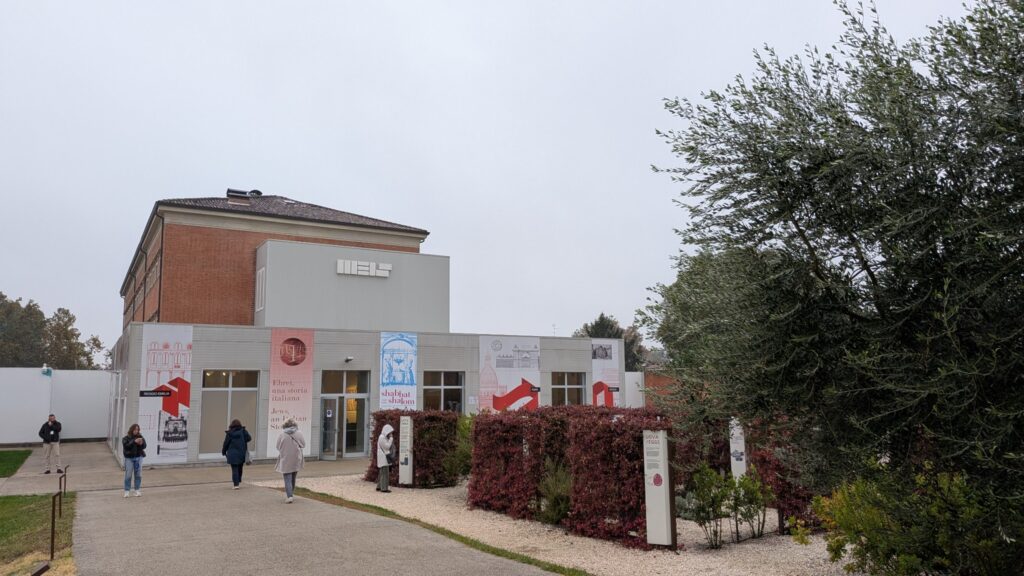
Ferrara, 10 November 2026 – On the second day of the first MiDorLeDor Europe Toolbox training, participants spent the morning at the Museo Nazionale dell’Ebraismo Italiano e della Shoah (MEIS). They studied the museum as a case study in the history, vision and narratives of Italian Jewish heritage.
Giulia Gallerani opened the programme with “Where It All Began: The Birth and Architecture of MEIS”, framing the interpretation of the building and how it shapes the museum today. MEIS Director Amedeo Spagnoletto then presented “The Last 6 Years at MEIS: Choices, Turning Points, Lessons Learned”, opening a discussion with participants about the challenges that both the museum and Jewish cultural heritage initiatives face today.
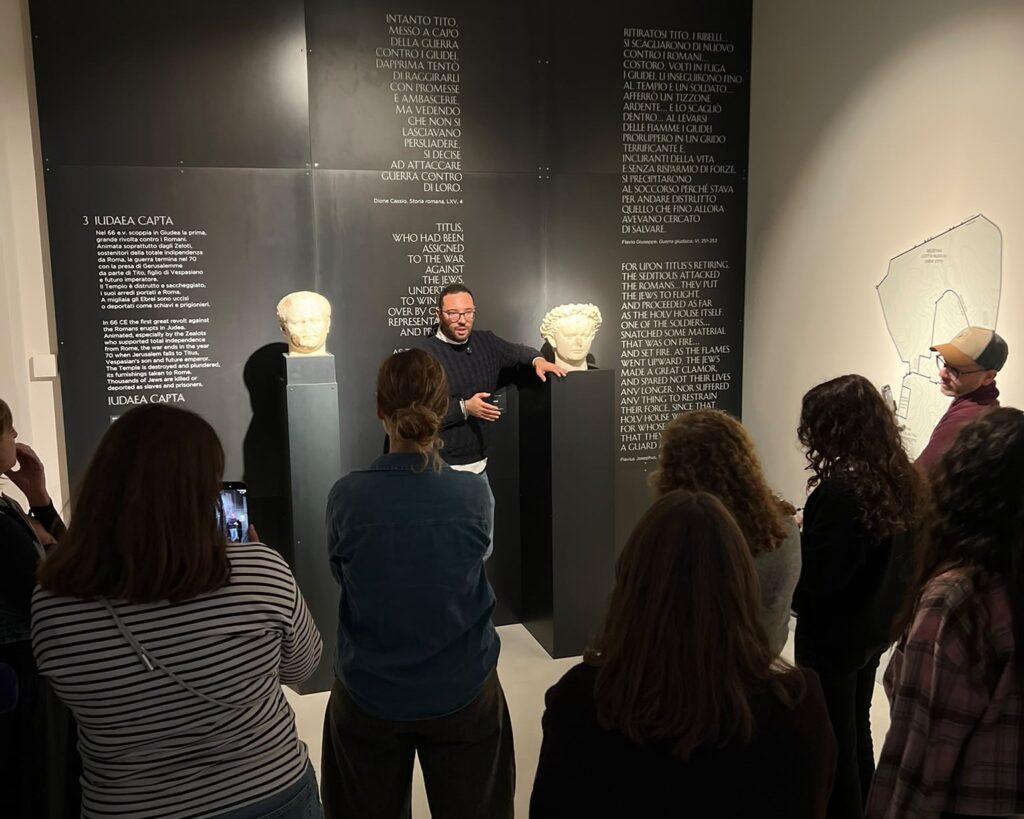
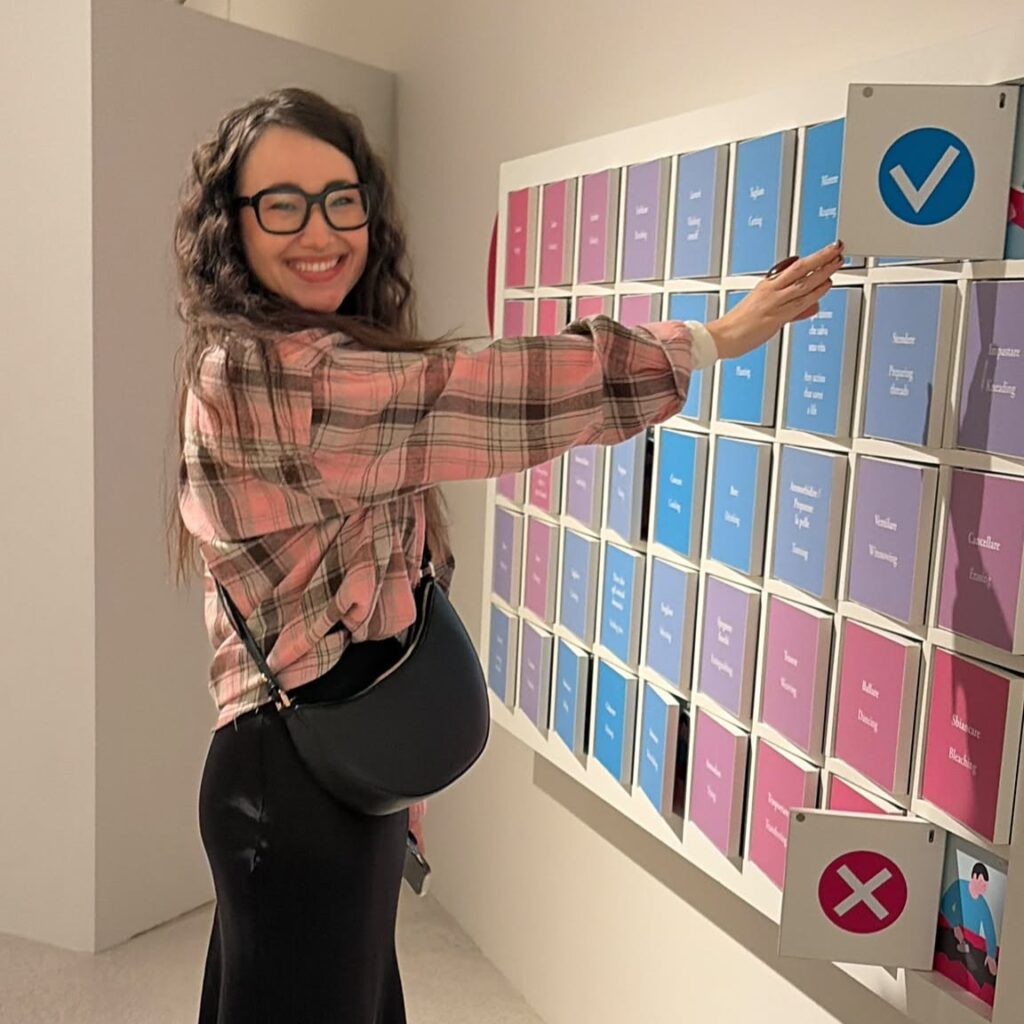
Davide Spagnoletto, curator of MEIS, led a guided tour of the permanent exhibition, “Inside the Museum: Telling Italian Jewish History Between Constraints and Possibilities”. The morning ended with Gemma Bolognesi’s session “Speaking to Everyone, Letting Objects Speak: Education at MEIS”. Bolognesi stressed that audiences never start from scratch: everyone carries stigmas and preconceived ideas about the Jewish people and their history, as well as cultural barriers that can make it harder to connect with the museum’s narrative. Object-based learning plays a key role in responding to this, using objects as an entry point for dialogue and for questioning assumptions. She also outlined the different audience profiles MEIS works with and its educational offer, which includes tours of the city of Ferrara and, above all, an audience diversification strategy built on a wide range of activities designed to engage with the museum’s narrative. The session also included a workshop in the temporary exhibition “The 20th century in one room”, an education-oriented exhibition that proved an ideal tool for consolidating participants’ reflections on narrative.
In the afternoon, Marta Eichelberger-Jankowska (Taube Center for Jewish Life & Learning) led “First impressions and first steps in narrative building”, which asked participants to analyse their own narratives.
In the early evening, the group travelled by train to Venice, where the training ends on Wednesday 11 November.
The training for trainers in Italy is led by Fondazione Ebraici per in Beni Culturali in Italia.