The European Memory Data Space: A Collaborative Workshop with Jewish Heritage Practitioners
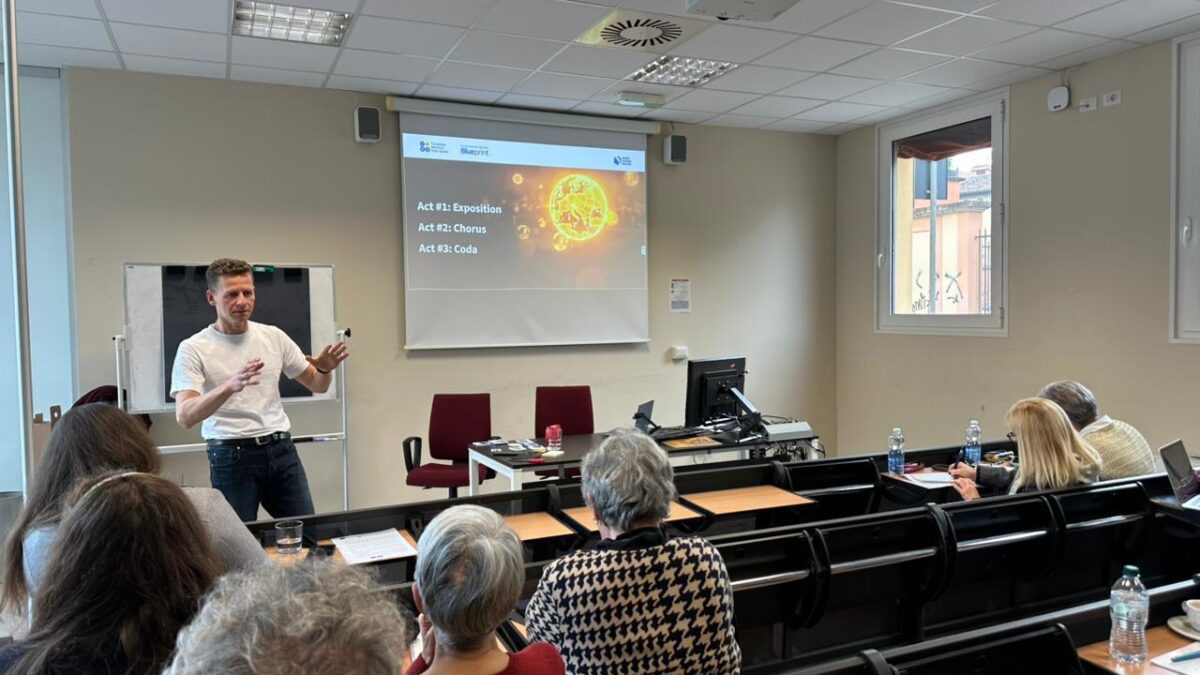
As part of the European Memory Data Space (EMDS) – Blueprint project, members of the European Routes of Jewish Heritage network participated in a workshop led by Jewish Heritage Network titled Building Together the European Memory Data Space. The workshop aimed to introduce the conceptual foundations and practical implications of building a shared European data space for Holocaust- and memory-related materials.
The workshop invited participants not only to understand what a data space is, but also to actively reflect on how such an infrastructure could support their own digital initiatives. Across all stages, the focus remained firmly on the real-world practices, constraints and aspirations of heritage institutions.
Ahead of the in-person workshop, participants joined a short online preparatory session which introduced the goals of the EMDS Blueprint project, outlined the core principles of data spaces, and set expectations for the in-person meeting. Participants were encouraged to bring not only success stories, but also unresolved questions, failed experiments and structural challenges from their own digital work.
Using a questionnaire, participants reflected on the purpose and educational value of their project, the sourcing and licensing of digital materials, legal and ethical constraints, technical and organisational challenges and long-term sustainability and preservation strategies.
This preparatory work ensured a shared vocabulary and allowed participants to arrive with concrete cases that could be meaningfully connected to data-space concepts during the workshop.
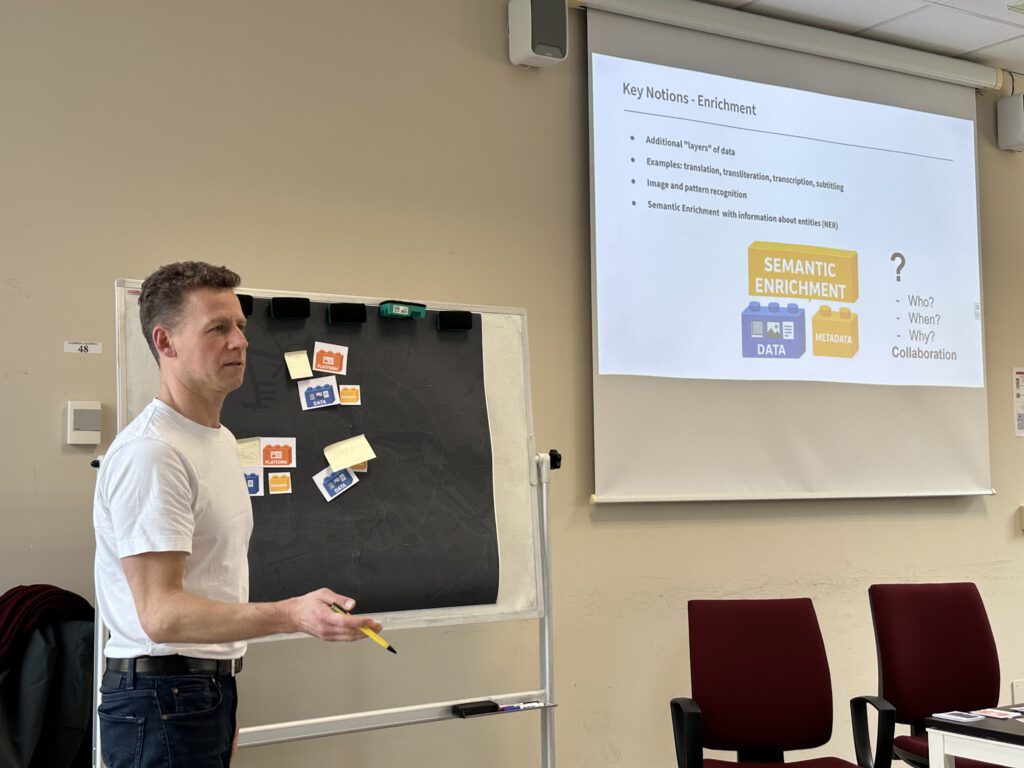
The main workshop opened with an hour-long presentation offering a deliberately non-technical introduction to the architectures behind data spaces. Instead of relying on specialist terminology, the session used visual metaphors and examples familiar to heritage professionals to explain what a data space is, and how it differs from databases or portals; the core components such as data pods, governance frameworks, connectors, identity management, metadata or semantic enrichment; how cultural heritage institutions can participate in and benefit from a data space; and how rights, ethics, interoperability and long-term access become core design elements.
A particularly well-received aspect of the presentation was the analogy drawn between the layered structure of data spaces and Jewish traditions of commentary, interpretation, and accumulation of knowledge over time. This parallel provided an intuitive and culturally meaningful way to grasp the evolving and relational nature of a shared data ecosystem.
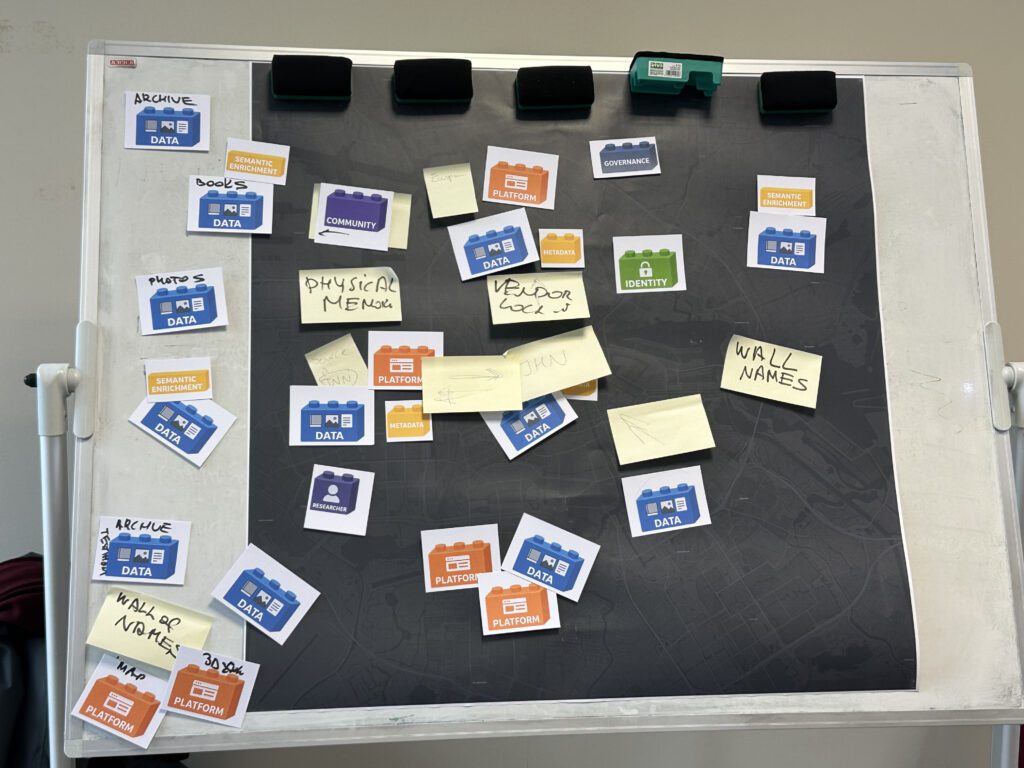
In the second part of the workshop, participants reviewed their digital projects through the lens of a potential future European Memory Data Space. Through guided discussion, they explored how their initiatives might benefit from or help shape such an infrastructure.
Both the presentation and the co-creation session employed custom-designed conceptual building blocks representing elements. This hands-on methodology made abstract ideas tangible and highlighted the interdependencies between the various technical, ethical and institutional components.
By grounding the concept of data spaces in lived professional experience and culturally resonant frameworks, the workshop demonstrated how the European Memory Data Space can be collectively shaped by the institutions and communities it seeks to serve.
The European Memory Data Space – Blueprint is funded by the European Union. Views and opinions expressed are however those of the author(s) only and do not necessarily reflect those of the European Union or the European Education and Culture Executive Agency (EACEA). Neither the European Union nor EACEA can be held responsible for them.