Madrid Hosts Presentation of the National Report Card on Antisemitism in Spain Under the EU-Funded Noa Project
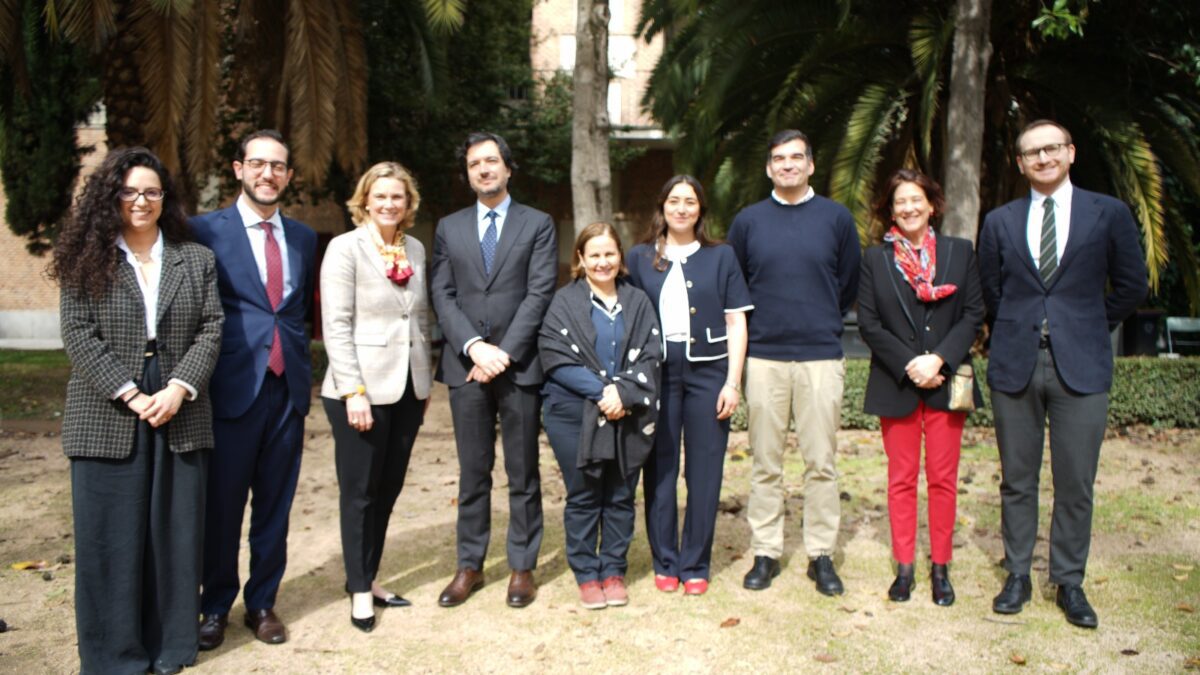
Madrid, 11 March 2026 – The National Report Card on government measures to combat antisemitism and foster Jewish life in Spain was presented in Madrid during a conference hosted at Centro Sefarad-Israel, organised within the framework of the NOA – Networks Overcoming Antisemitism project, funded by the European Union.
The event brought together policymakers, researchers, representatives of Jewish organisations and civil society actors to discuss the current state of policies addressing antisemitism and supporting Jewish life in Spain and across Europe.
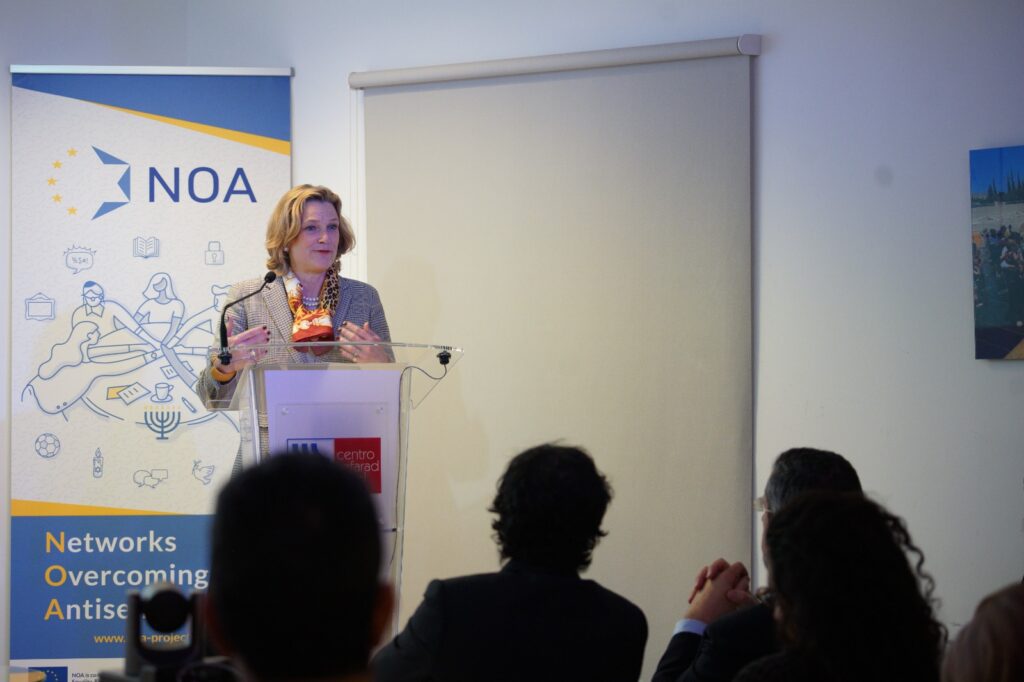
The conference featured the participation of Katarina von Schnurbein, European Commission Coordinator on Combating Antisemitism and Fostering Jewish Life, who emphasised the importance of coordinated action between public authorities, civil society and Jewish communities. She highlighted the need for sustained political commitment and cooperation at all levels in order to effectively address antisemitism and create the conditions for Jewish life to flourish across Europe.
In his opening remarks, François Moyse, President of the AEPJ, presented the work of the organisation and underlined the role of Jewish culture and heritage as drivers of social development and intercultural dialogue. He also recalled Spain’s leading role in the field of Jewish heritage, noting that the Red de Juderías de España was one of the founding partners of the AEPJ and has contributed significantly to the development of European cooperation initiatives in this area.
Addressing the broader context of rising antisemitism in Europe, Moyse called for stronger cooperation across sectors and institutions. He stressed the importance of coordinated efforts between public authorities, cultural institutions, civil society organisations and Jewish communities in order to respond to a situation that remains deeply concerning.
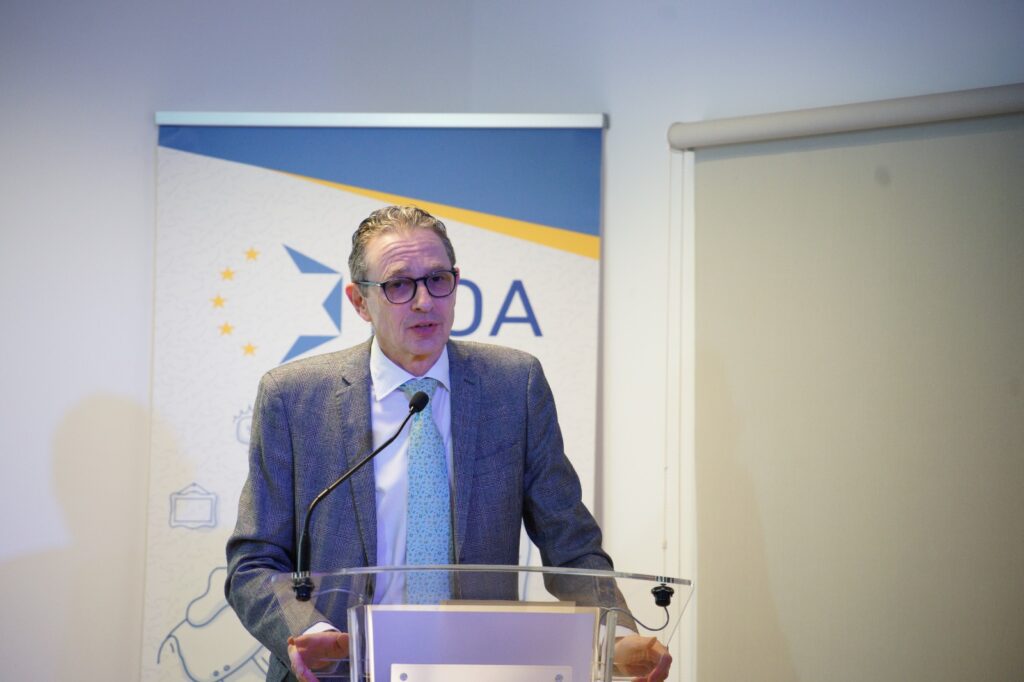
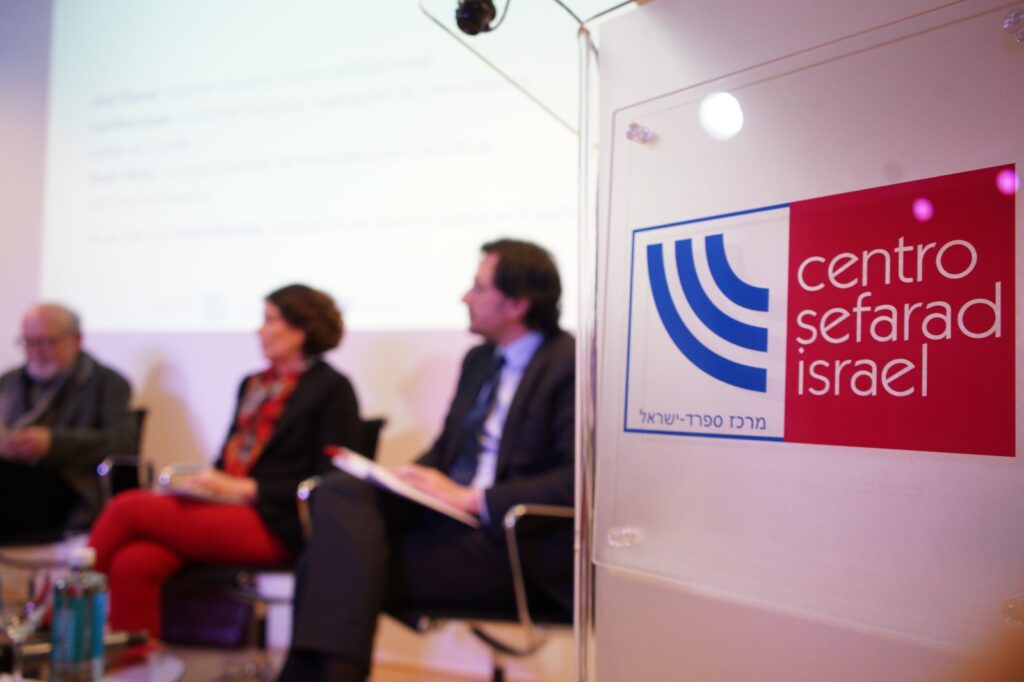
Throughout the day, the conference featured several thematic sessions exploring different dimensions of the fight against antisemitism and the promotion of Jewish life. Experts and practitioners discussed the findings of the Spain National Report Card, examining both progress made and remaining challenges in the implementation of policies addressing antisemitism.
The program also included roundtable discussions bringing together representatives from public institutions, Jewish organisations and civil society to reflect on key areas such as education, youth engagement and cultural initiatives as drivers of vibrant Jewish life in Spain. Speakers highlighted the importance of strengthening cooperation between national and local authorities, community organisations and cultural institutions in order to build sustainable responses to antisemitism.
The conference was organised by the consortium of the NOA project, coordinated by CEJI – A Jewish Contribution to an Inclusive Europe, together with European Union of Jewish Students (EUJS), the World Jewish Congress (WJC) and the AEPJ.
The AEPJ expressed its sincere gratitude to Centro Sefarad-Israel and the Federation of Jewish Communities of Spain, for hosting the conference in Madrid, as well as to all partners and experts who contributed to the development of the project and the preparation of the report.
The National Report Cards, developed within the framework of the NOA project, provide a comparative assessment of government measures across Europe to combat antisemitism and foster Jewish life. Based on an analysis of policies, legislation, institutional frameworks and educational initiatives, the reports identify both progress made and areas where further action is needed.
The Spain National Report Card presents a mixed picture. While certain steps have been taken in recent years to align with broader European commitments on combating antisemitism and fostering Jewish life, progress remains uneven and several important gaps persist.
The report notes that, although awareness of antisemitism has increased and some institutional initiatives have been developed, further work is needed to translate these commitments into more consistent and effective public policies. In particular, the findings underline the need to strengthen monitoring and data collection on antisemitic incidents, expand educational initiatives addressing Jewish history and antisemitism and improve coordination between national authorities, regional institutions and civil society actors.
More broadly, the report suggests that tackling antisemitism requires sustained and structured public action. It calls for stronger cooperation between public institutions, community organisations and civil society, as well as a more ambitious approach to fostering Jewish life as an integral part of democratic and pluralistic societies.
The Spain National Report Card, together with the reports from other participating countries, is available at: