
Jews of the Pope – heritage route

The route takes you on a unique journey through Vaucluse, a french administrative division (department) in Provence, in the south of France, where jews coming from various parts of (western) Europe forged a singular identity under papal authority and protection.
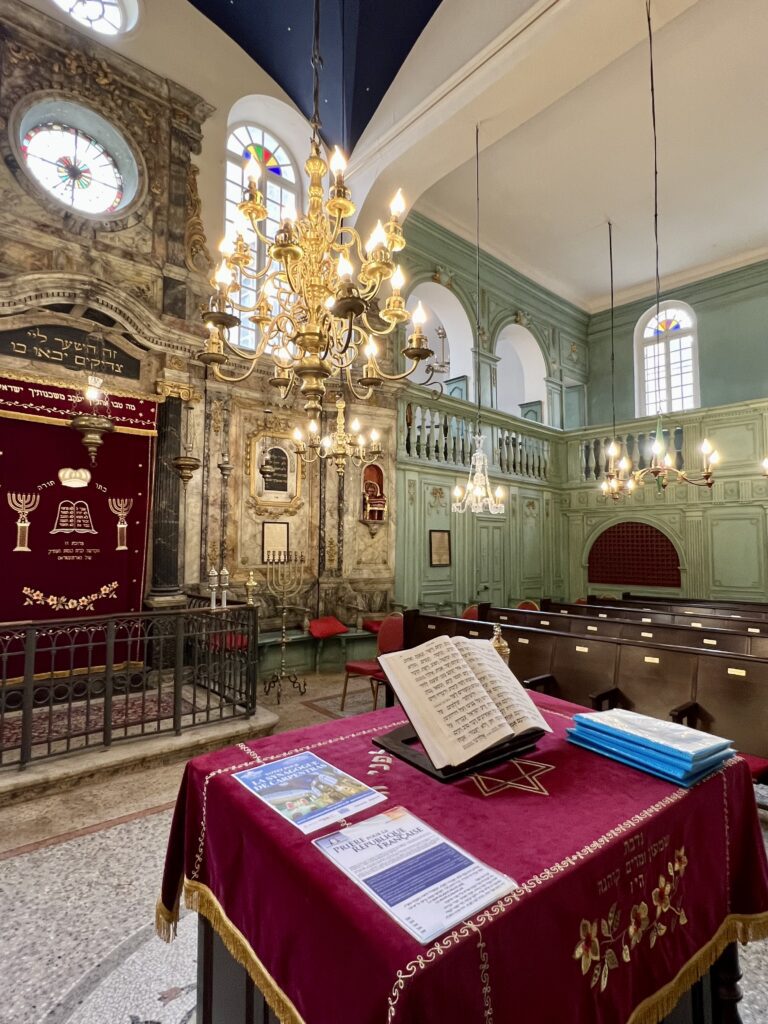

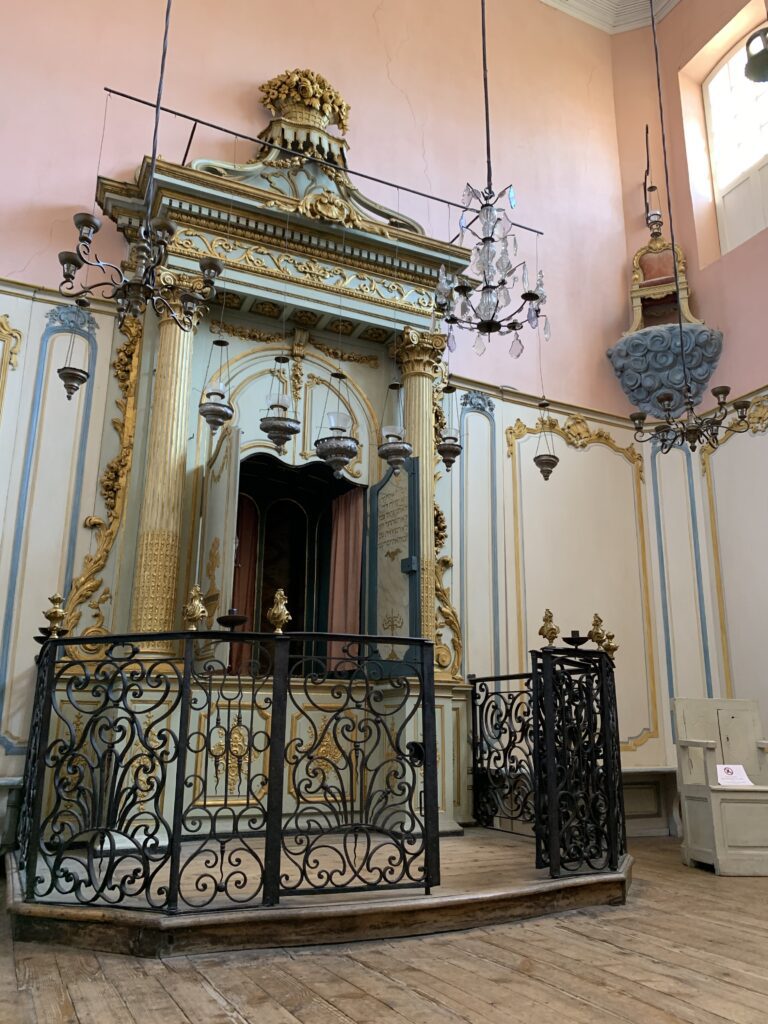
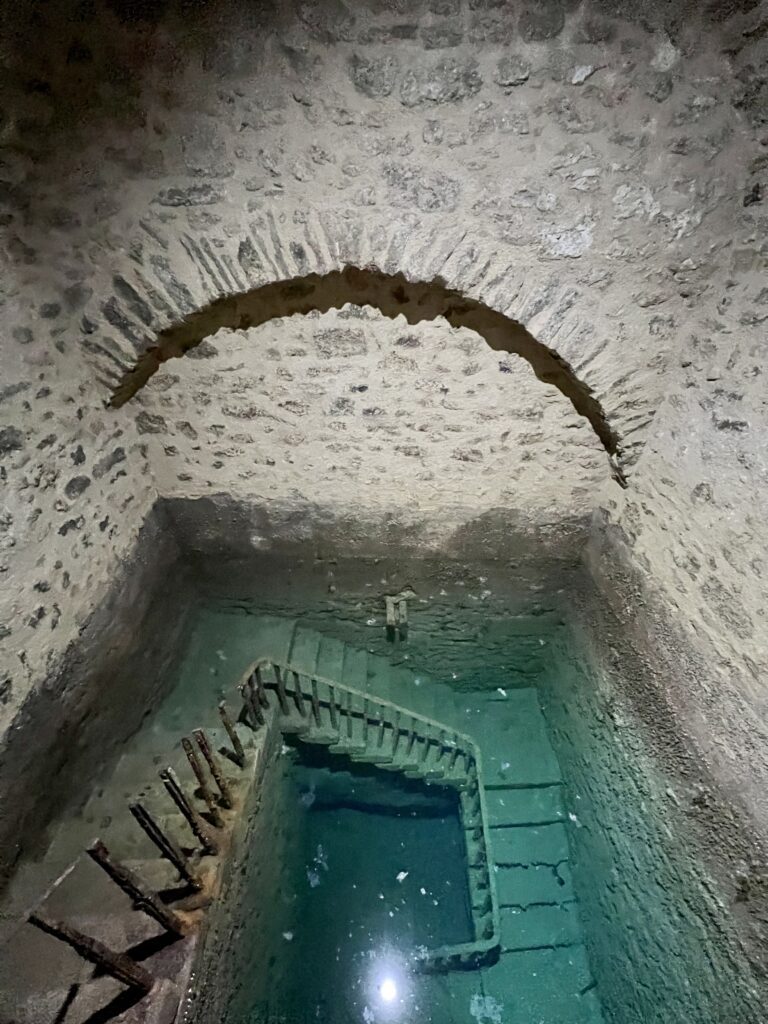
The Route of the Jews of the Pope invites visitors to explore an exceptional chapter of European Jewish history, rooted in the former Papal territories of southern France. While Jewish presence in the region is attested earlier, a defining phase begins in 1274, when the Comtat Venaissin, located in what is known as the Vaucluse today, became a possession of the Holy See. From then until 1791, Jewish communities lived under papal authority in the Comtat and in Avignon, developing a distinctive way of life shaped by both protection and restriction.
This route connects five historic cities — Avignon, Carpentras, Cavaillon, L’Isle-sur-la-Sorgue and Pernes-les-Fontaines . Avignon, Carpentras, Cavaillon and L’Isle-sur-la-Sorgue were the main centres of organised Jewish residence in the region from the late Middle Ages onward, also known as the 4 kehilot, and Pernes-les-Fontaines is considered as a secondary settlement of jews, sometimes called « the 5th kehila ».
Beyond its historical dimension, the route invites reflection on cultural diversity, coexistence and resilience, showing how communities of different origins, brought together through successive expulsions across Europe, created a shared and lasting identity.
Summary of Jewish History in the Region
Jewish communities were present in Provence from at least the early Middle Ages but their growth was reinforced by successive expulsions from the Kingdom of France (14th century) and later from the Iberian Peninsula (late 15th century).
From the middle of the 15th century, papal policies progressively concentrated Jewish populations into enclosed quarters known as carrières. This was a gradual process rather than a single event, leading to a highly structured but spatially constrained urban life.
Within these confined environments, diverse traditions — Provençal, French and Iberian— interacted and gradually merged. This gave rise to a distinct Comtadin Jewish identity, expressed in religious practices, communal organisation and everyday life.
By the 18th century, the population reached its peak, estimated at around 2,500 to 3,000 individuals, concentrated in the five cities of the route, with Carpentras and Avignon as the main centres.
Connection with the European Context
The “Jews of the Pope” in the Comtat Venaissin were not an isolated community, but part of a wider Mediterranean Jewish network extending to the Papal States in Italy.
Movements of people, goods, and knowledge between southern France and Italian centers such as Livorno and Ancona are well documented.
In both regions, Jewish populations lived under a similar system combining protection and restriction, which shaped their daily lives, urban organization, and religious practices. Enclosed neighborhoods — known as “carrières” in southern France and ghettos in Italy — structured community life around synagogues and shared institutions, reflecting a common model imposed by the Holy See.
This shared yet diverse heritage highlights the strong historical connections between southern France and Italy, offering a compelling European perspective on Jewish life under papal rule.
- A unique Jewish history under papal rule from 1274 to 1791
- Five historic communities: Avignon, Carpentras, Cavaillon, L’Isle-sur-la-Sorgue and Pernes-les-Fontaines
- A community shaped by successive migrations across Europe
- Remarkable preserved carrières, synagogues and ritual spaces as well as cemeteries
- A distinctive liturgical tradition often referred to as the Comtadin rite
- A unique regional language: Judeo-Provençal (Shuadit)
- A rare example of cultural synthesis within constrained urban environments
The route offers a dense and well-preserved heritage landscape:
- Avignon – the former Jewish quarter around Rue Jacob
- Carpentras – the synagogue (14th century, rebuilt in the 18th century), still in use, with its mikveh, the cemetery
- Cavaillon – the 18th-century synagogue, now a museum
- L’Isle-sur-la-Sorgue – the preserved urban layout of the former carriere with a special highlight on one specific building: l’immeuble Beaucaire, recently refurbished and ongoing works to highlight this historical heritage, especially the location of the temple and surroundings. A cemetery also exists.
- Pernes-les-Fontaines – remnants and urban structure of the Jewish quarter, and especially ritual baths (mikvot)
Local Language, Literature and Traditions
A key element of this heritage is the Judeo-Provençal language (Shuadit), used from the Middle Ages until the 19th century. Blending Occitan and Hebrew elements, it reflects the hybrid identity of these communities.
Its last known speaker, Armand Lunel, preserved its memory through literary works that remain an essential testimony to this cultural world.
This linguistic heritage is closely linked to a broader set of traditions, including a distinctive liturgical tradition often referred to as the Comtadin rite, shaped by multiple cultural influences.
Cultural Programmes and Visitor Experience
The Route of the Jews of the Pope benefits from a dynamic network of cultural and educational initiatives that bring this heritage to life.
Several cities along the route participate in the European Days of Jewish Culture, including Cavaillon and L’Isle-sur-la-Sorgue, hosting guided tours, concerts, exhibitions and public events that foster intercultural dialogue.
Museums and interpretation spaces, particularly in Carpentras and Cavaillon, offer insight into daily life in the carrières, while guided tours and heritage trails across all five cities allow visitors to engage directly with the historical urban fabric.
Academic research, supported by regional universities and research institutions, contributes to the ongoing study and interpretation of this heritage, enriching public understanding and educational programmes.
These initiatives combine historical research, community involvement and contemporary cultural expression, making the route a living cultural experience that connects past and present.

Nathalie Zaouati
Nathalie Zaouati is the president of the “Patrimoine des Juifs du Pape” (Heritage of the Jews of the Pope) association, dedicated to preserving, promoting and sharing this unique heritage.
Nathalie is a part-time resident of L’Isle-sur-la-Sorgue, one of the one of the historic communities of the Arba Kehilot (“Four Holy Communities”), that shaped the history of the Jews of the Pope from the Middle Ages until the French Revolution. She is getting actively involved in highlighting the town’s Jewish heritage and plansto work with local authorities, cultural institutions and touristic structures to promote this remarkable chapter of European Jewish history.