AEPJ Participates in the Final NOA European Conference in Brussels
The European Association for the Preservation and Promotion of Jewish Culture and Heritage (AEPJ) participated in the Final European Conference of the NOA – Networks Overcoming Antisemitism project, held in Brussels on 26–27 May 2026 at the Representation of the State of Hessen to the European Union.
The NOA project brings together four major European Jewish organisations — the AEPJ, CEJI – A Jewish Contribution to an Inclusive Europe, the European Union of Jewish Students (EUJS), and the World Jewish Congress (WJC) — with the aim of developing innovative public–civil society partnerships to combat antisemitism across Europe. Supported by European Union funding, the project combines educational initiatives, socio-cultural programming, training activities, sports workshops, policy tools, and the pioneering National Report Card methodology, promoting a holistic approach that connects policy and practice, education and security, and local and transnational action. The second phase of the project began in 2024 and concluded with this Final European Conference in Brussels. The conference gathered representatives of European institutions, Jewish organisations, municipalities, researchers, educators, and civil society actors to reflect on innovative approaches to combating antisemitism and fostering Jewish life across Europe. As one of the core partners of the consortium, the AEPJ contributed actively throughout the conference programme and discussions.
 The AEPJ delegation included Patrick Bikard, member of the AEPJ Board and Treasurer; Victor Sorenssen, Director of the AEPJ; and Sonja Viličić, Programme Manager of the Cities Embracing Jewish Heritage initiative.
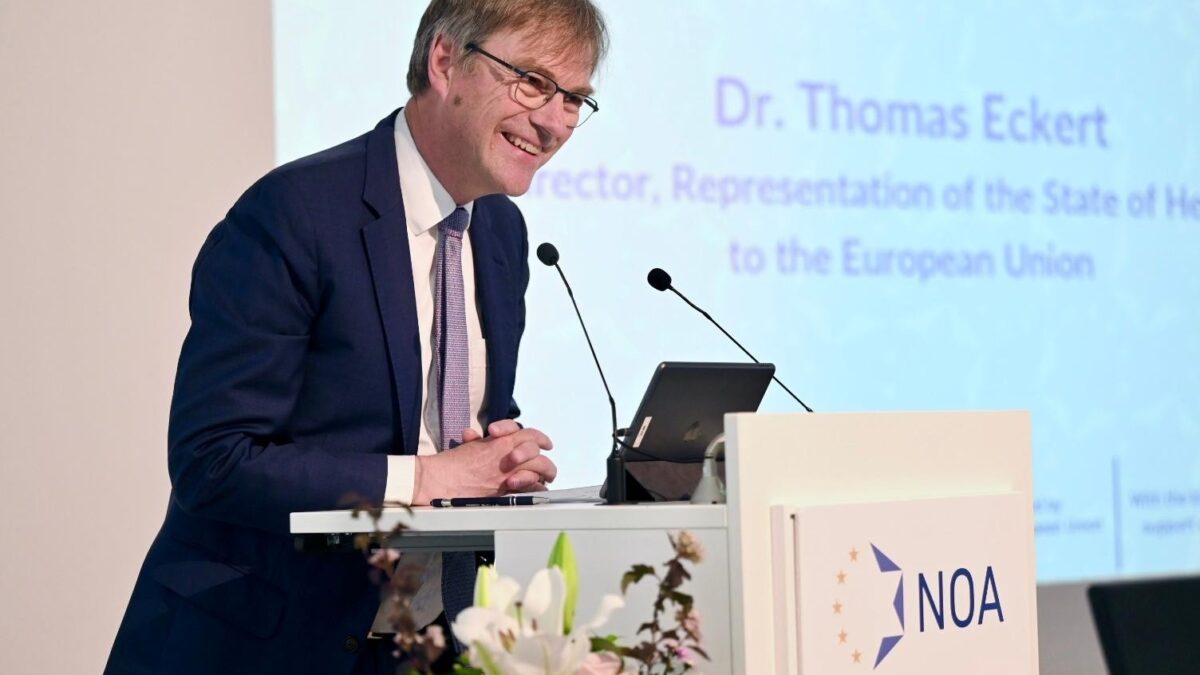
The conference opened with interventions by Dr. Thomas Eckert, Director of the Representation of the State of Hessen to the European Union; Robin Sclafani, Executive Director of CEJI; and John Malkinson, Chief Operating Officer of the World Jewish Congress, followed by an overview of the NOA project presented by Estelle Cincinatis, NOA Project Coordinator at CEJI.
The programme addressed a broad range of themes connected to antisemitism prevention, policy implementation, education, intercultural dialogue, community resilience, and cooperation between public authorities and civil society. One of the central discussions of the first day focused on the impact of the NOA National Report Cards and their role in translating research and evaluation into concrete policy measures and local action. The panel included contributions from Anu Laas (Poll OÜ), Marta Simó, Rosa Méndez (Centro Sefarad-Israel), and Irina Shlick (Jewish Community of Estonia), moderated by Sacha Gutmann from Golem Belgium. The first day also included parallel sessions led by Tralalere and CEJI on educational methodologies and collective approaches to diagnosing and addressing antisemitism, as well as a screening excerpt of the documentary Diasporas: Sephardic Jews from Here and Elsewhere directed by Clara Elalouf.
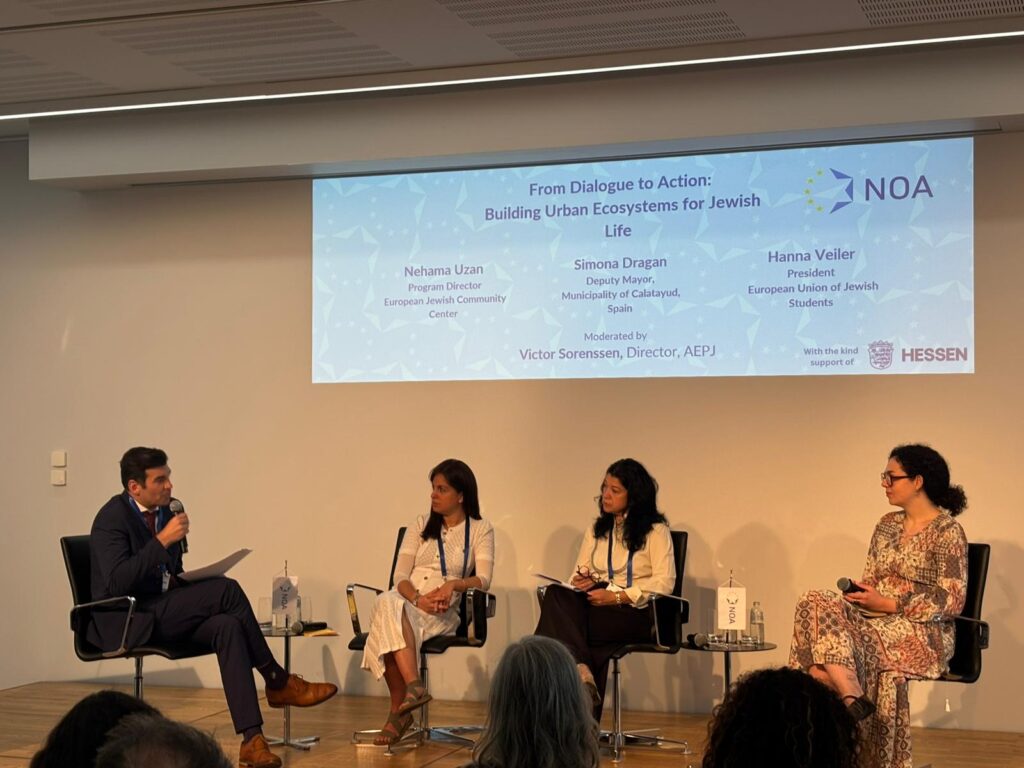
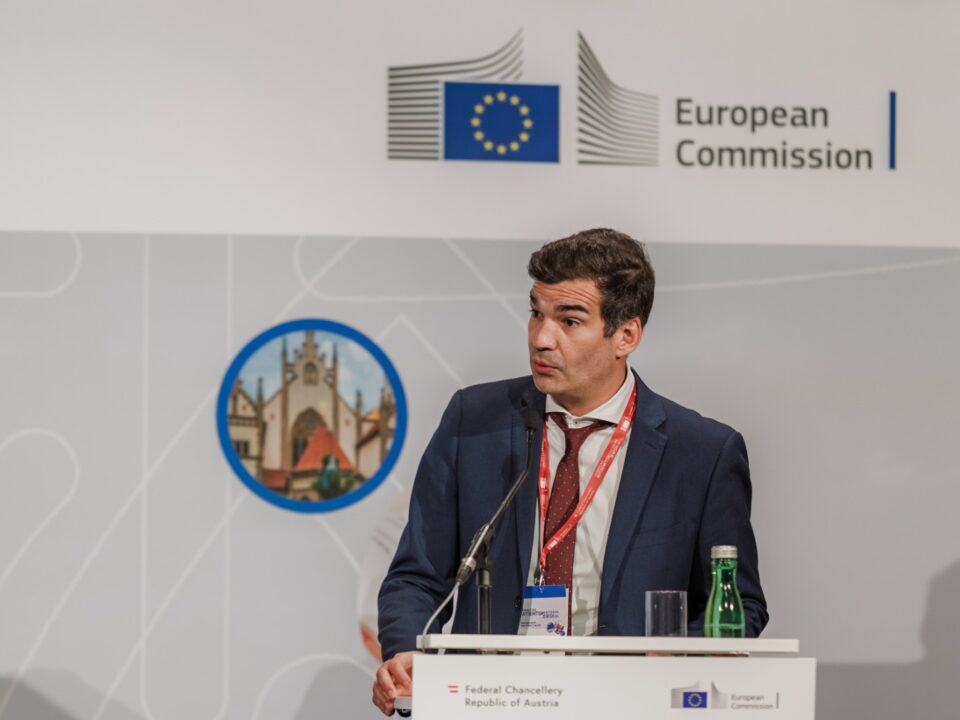
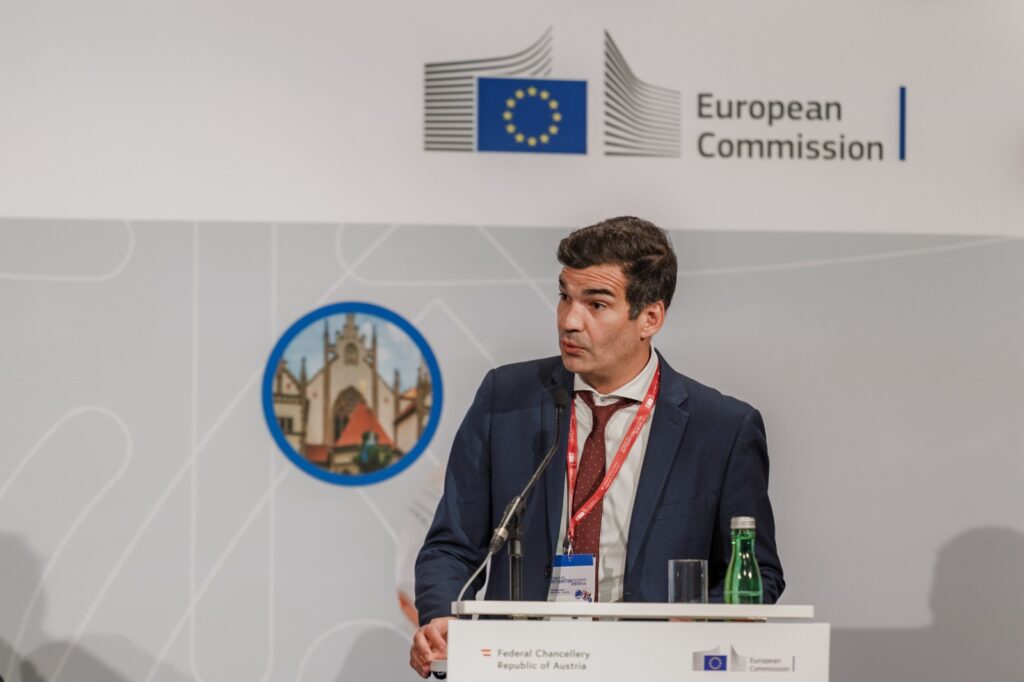
On the second day of the conference, Victor Sorenssen moderated the panel discussion “From Dialogue to Action: Building Urban Ecosystems for Jewish Life”, dedicated to exploring how cities, Jewish communities, youth organisations, and international actors can work together to create meaningful and sustainable environments for Jewish life to thrive. The panel featured Nehama Uzan, Program Director at the European Jewish Community Center; Simona Dragan, Deputy Mayor of Calatayud (Spain); and Hanna Veiler, President of the European Union of Jewish Students. The discussion focused on long-term cooperation, local engagement, intercultural dialogue and the role of municipalities and cultural initiatives in fostering inclusive urban environments.
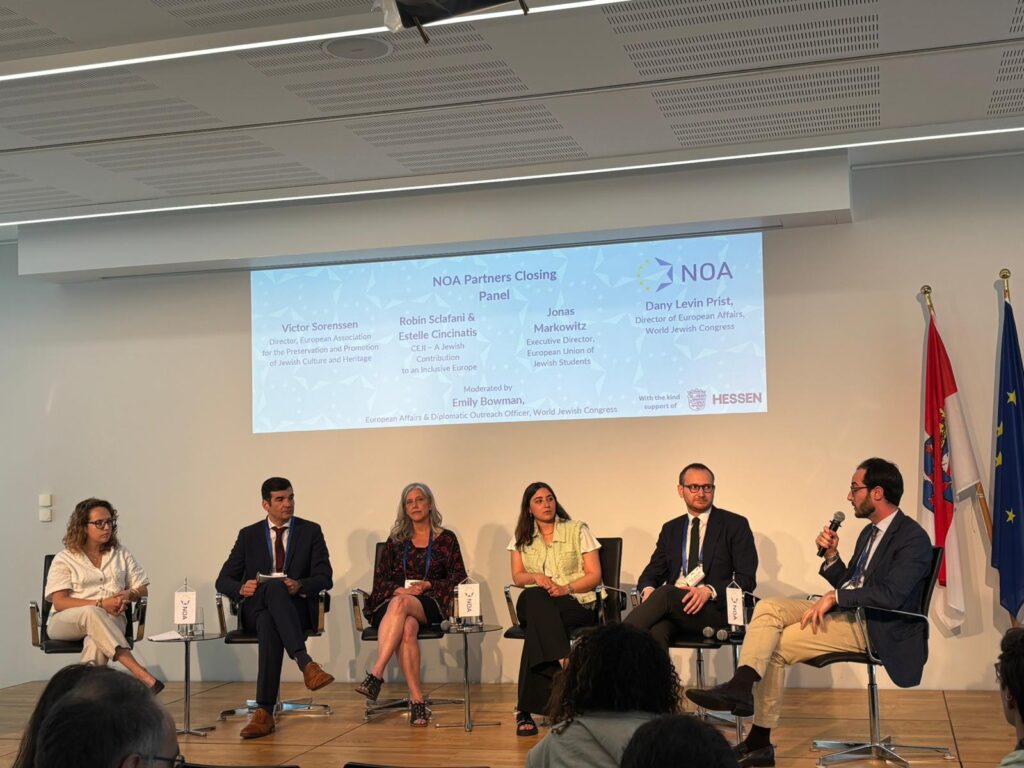
Sonja Viličić facilitated one of the parallel sessions of the conference, inspired by the well-known passage from Pirkei Avot: “If I am not for myself, who will be for me? If I am only for myself, what am I? And if not now, when?”. The session explored questions connected to responsibility, dialogue, identity, and social participation, bringing perspectives linked to cultural heritage, intercultural exchange, and community engagement. The AEPJ also participated in the NOA Partners Closing Panel, represented by Victor Sorenssen alongside Robin Sclafani and Estelle Cincinatis (CEJI), Jonas Markowitz (EUJS), and Dany Levin Prist (World Jewish Congress), in a final discussion reflecting on the achievements of the project and future perspectives for European cooperation in combating antisemitism and fostering Jewish life.
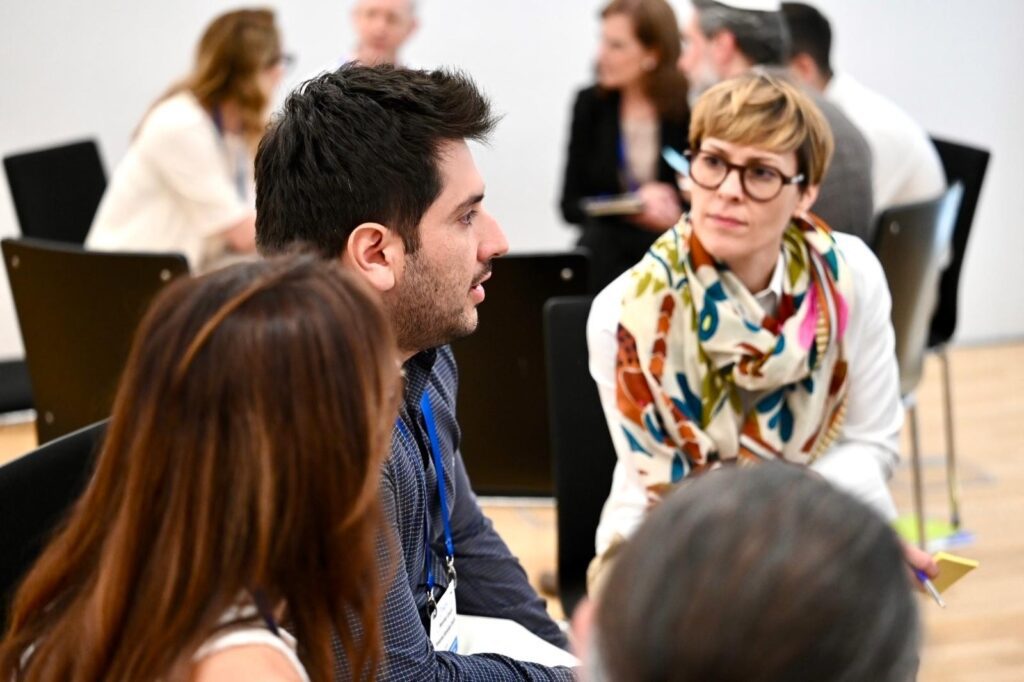
Throughout the conference, the AEPJ contributed its distinctive perspective linking Jewish heritage, culture, education, and intercultural dialogue. The organisation highlighted the importance of heritage and cultural initiatives as tools for strengthening democratic values, encouraging participation, and creating spaces for mutual understanding across diverse communities.
On the occasion of the conference, the AEPJ and CEJI also formalised a new Memorandum of Understanding (MoU), reinforcing the long-standing cooperation between both organisations and opening new possibilities for collaboration in the fields of education, Jewish heritage, intercultural dialogue, and combating antisemitism. The agreement was signed by Patrick Bikard on behalf of the AEPJ and Alain Philippson on behalf of CEJI.