AEPJ Strengthens European Jewish Heritage Networks at AEJM Annual Conference in Warsaw
filter: 0; fileterIntensity: 0.0; filterMask: 0; captureOrientation: 0; brp_mask:0; brp_del_th:null; brp_del_sen:null; delta:null; module: photo;hw-remosaic: false;touch: (0.18888889, 0.39375);sceneMode: 8;cct_value: 0;AI_Scene: (-1, -1);aec_lux: 0.0;aec_lux_index: 0;albedo: ;confidence: ;motionLevel: -1;weatherinfo: null;temperature: 35;
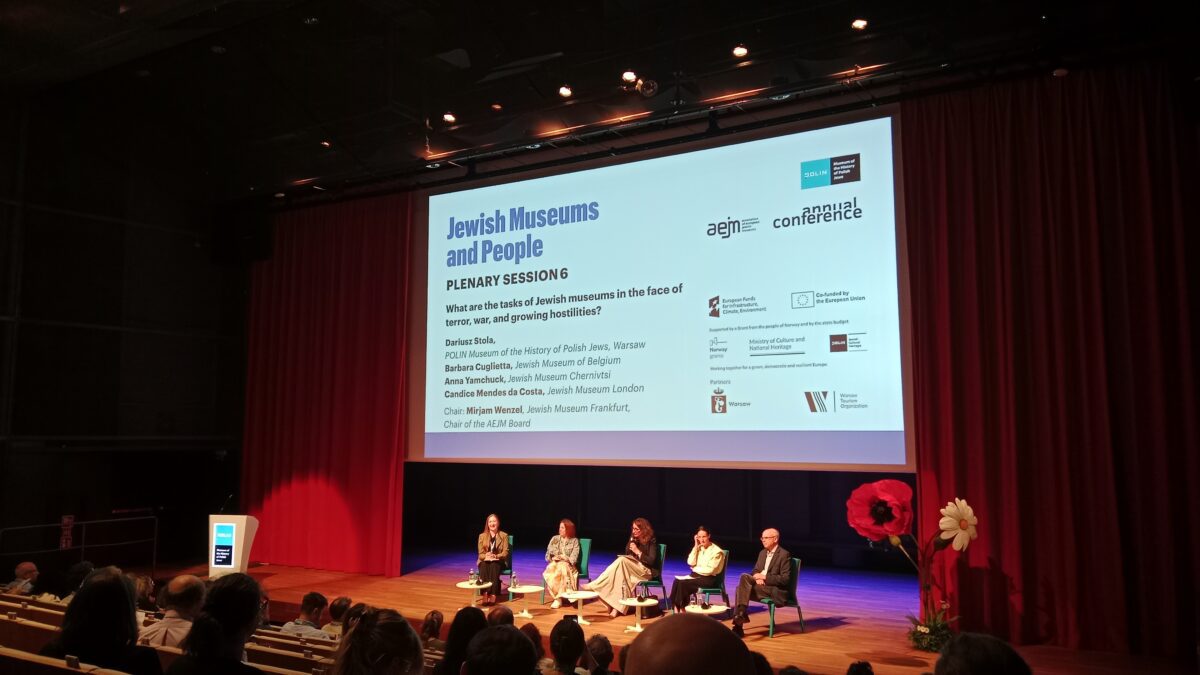
AEPJ, as an associate member of the Association of European Jewish Museums (AEJM), participated in the AEJM Annual Conference 2026, held at the POLIN Museum of the History of Polish Jews in Warsaw on 7th, 8th and 9th June. Under the theme Jewish Museums and People, the three-day event brought together professionals from Jewish museums and heritage institutions across Europe and beyond.
The conference proved to be a valuable opportunity for AEPJ to strengthen existing partnerships and forge new connections with a wide range of actors in the Jewish heritage sector. Over the course of the three days, AEPJ representatives engaged in meaningful exchanges with museum directors, curators, educators, and cultural heritage professionals from across Europe, Israel, and North America.
Among the AEPJ members present were Menorah Foundation, the AEPJ member behind the Bratislava Jewish Community Museum and the development of the Slovak Jewish Heritage Route, and the Izmir Jewish Heritage Route from Türkiye — both of whom actively participated in the conference’s sessions and networking activities. Their presence underscored the growing role of Jewish heritage routes as key stakeholders within the broader European Jewish cultural landscape.
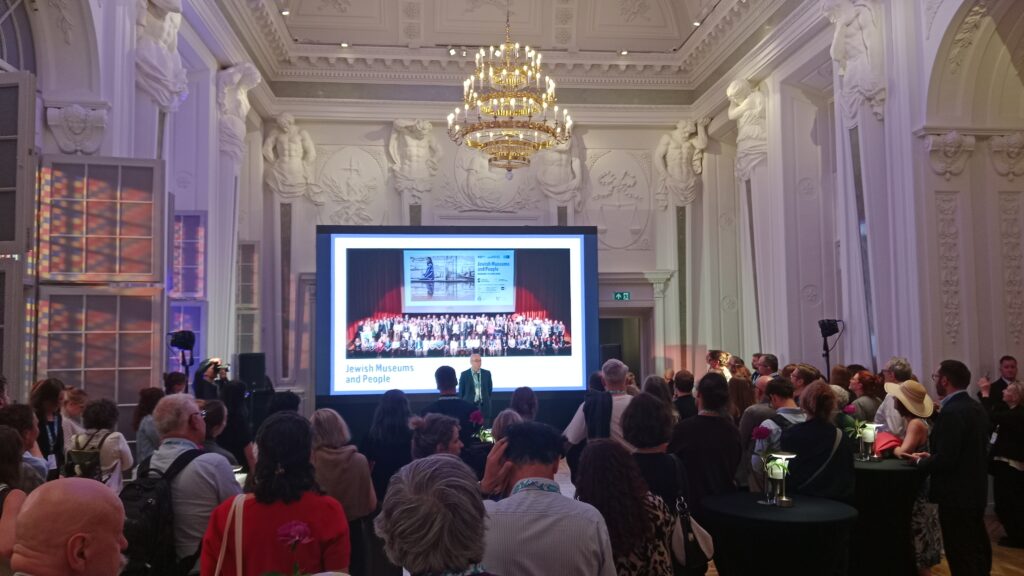
The conference’s dedicated networking sessions offered a structured yet open space for peer-to-peer exchange — an opportunity that AEPJ and its members used to deepen dialogue with museum professionals and explore potential areas of future collaboration.
Beyond the networking opportunities, the conference offered a rich programme of plenary sessions and workshops addressing some of the most pressing challenges facing Jewish museums and heritage institutions today — from the integration of new technologies and participatory approaches in exhibitions, to questions of resilience in the face of rising antisemitism and geopolitical conflict, to the emotional demands placed on professionals working in this field.
A significant milestone of the conference was the presentation, during the AEJM Annual General Meeting on 9 June, of the upcoming collaboration between AEPJ and AEJM in the framework of the MDLDE programme. This forthcoming partnership marks a new chapter in the relationship between the two organisations, aligning Jewish heritage routes and Jewish museums under a shared European framework aiming for stronger impact in the educational field.