
The documentary Books: Alantansí’s Legacy, directed by the Aragonese filmmaker José Ángel Guimerá, restores the forgotten figure of Eliezer ben Abraham Alantansí, a pioneer of Hebrew printing in the Iberian Peninsula. Born in Huesca in the mid-15th century, he later moved to the town of Ixar (today Híjar, Teruel), where in 1482 he founded a printing workshop that became a milestone in the cultural history of Sepharad. There he produced foundational works of Sephardic Judaism, such as the Tur Orah Hayim and the Hebrew Bible with the Five Megillot—true incunabula now preserved in major libraries in Madrid, Jerusalem, Oxford, New York, and Turin.
The film follows the career of this scholar with entrepreneurial spirit, who worked under the protection of the first Duke of Híjar. His books, of exceptional typographic and aesthetic quality, attest to the refinement of a printer ahead of his time. The narrative blends docu-fiction scenes recreating his native Huesca, the synagogue, the workshop, and the Híjar printing press, with the research journey of historian Lucía Conte, who has tracked surviving copies in universities and archives worldwide. Filming locations include the old synagogue of Híjar—the only one in Spain that retains medieval painted decoration—the Four Sephardic Synagogues of Jerusalem, the Library of the Jewish Theological Seminary in New York, and the Bodleian Library in Oxford.
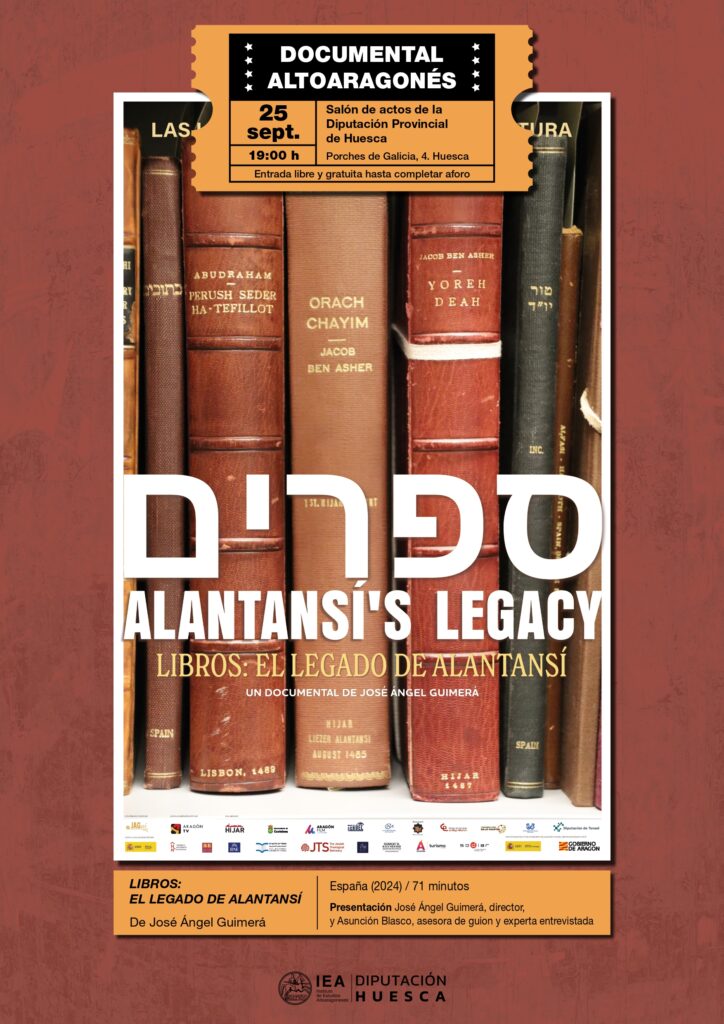
On September 25, Books: Alantansí’s Legacy will be screened in Huesca at the Diputación Provincial de Huesca, in an event organized by the Instituto de Estudios Altoaragoneses (DPH) as part of its Documental Altoaragonés section. This special screening holds a profound meaning: Eliezer ben Abraham Alantansí was himself born in Huesca, making this return of his story to his birthplace especially significant for the cultural identity of Alto Aragón.
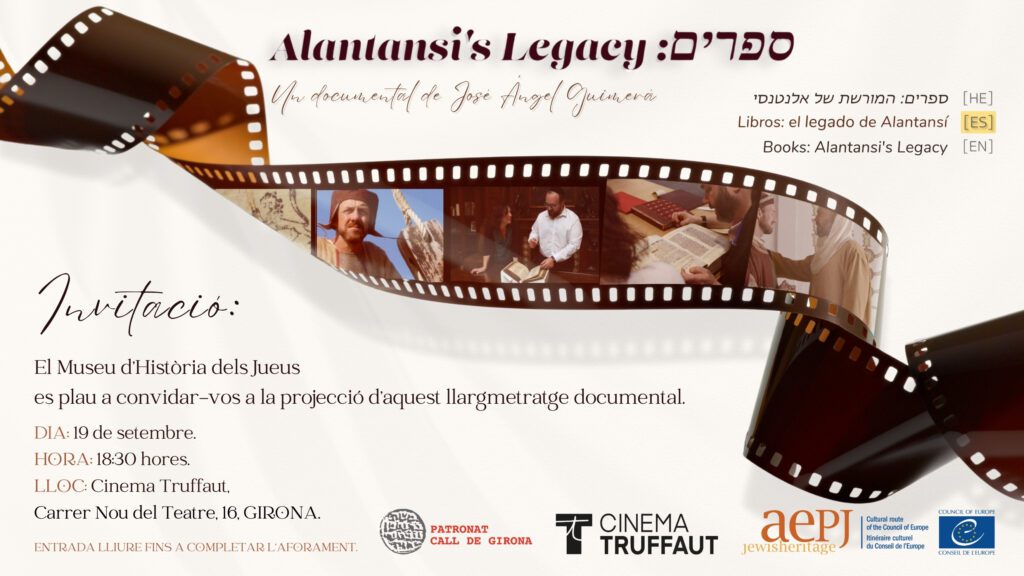
The Huesca screening is part of the special tour of Books: Alantansí’s Legacy organized on the occasion of the European Days of Jewish Culture 2025. This itinerary also includes Casa Sefarad (Madrid), the Synagogue of El Tránsito (Toledo), the Archive of the Crown of Aragon (Barcelona), Cinema Truffaut (Girona), and the Auditorium of the University of Zaragoza. A journey that invites audiences to rediscover, from Aragon to the world, the universal legacy of a Sephardic printer born in Huesca and established in Híjar.
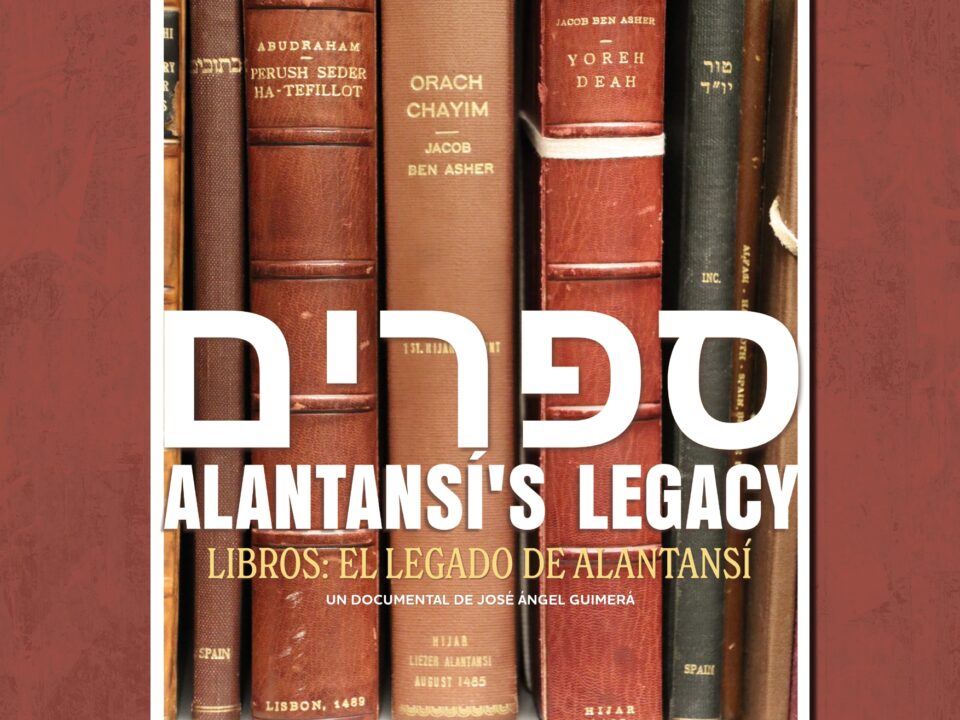
The documentary Books: Alantansí’s Legacy, directed by the Aragonese filmmaker José Ángel Guimerá, restores the forgotten figure of Eliezer ben Abraham Alantansí, a pioneer of Hebrew printing in the Iberian Peninsula. Born in Huesca in the mid-15th century, he later moved to the town of Ixar (today Híjar, Teruel), where in 1482 he founded a printing workshop that became a milestone in the cultural history of Sepharad. There he produced foundational works of Sephardic Judaism, such as the Tur Orah Hayim and the Hebrew Bible with the Five Megillot—true incunabula now preserved in major libraries in Madrid, Jerusalem, Oxford, New York, and Turin.
The film follows the career of this scholar with entrepreneurial spirit, who worked under the protection of the first Duke of Híjar.
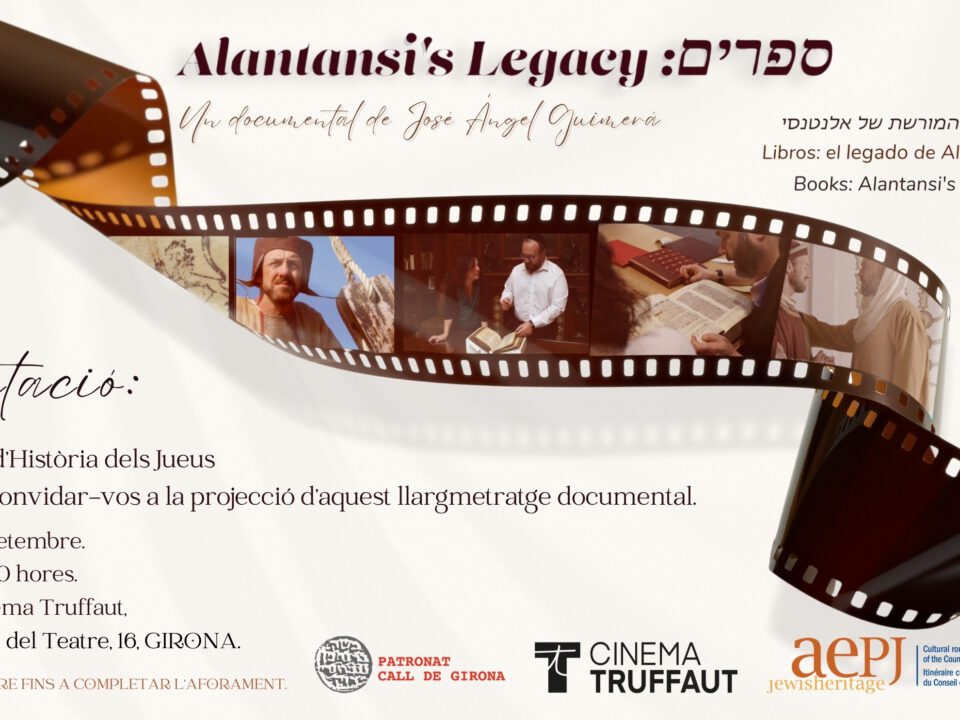
The documentary Books: Alantansí’s Legacy, directed by the Aragonese filmmaker José Ángel Guimerá, restores the forgotten figure of Eliezer ben Abraham Alantansí, a pioneer of Hebrew printing in the Iberian Peninsula. Born in Huesca in the mid-15th century, he later moved to the town of Ixar (today Híjar, Teruel), where in 1482 he founded a printing workshop that became a milestone in the cultural history of Sepharad. There he produced foundational works of Sephardic Judaism, such as the Tur Orah Hayim and the Hebrew Bible with the Five Megillot—true incunabula now preserved in major libraries in Madrid, Jerusalem, Oxford, New York, and Turin.
The film follows the career of this scholar with entrepreneurial spirit, who worked under the protection of the first Duke of Híjar.
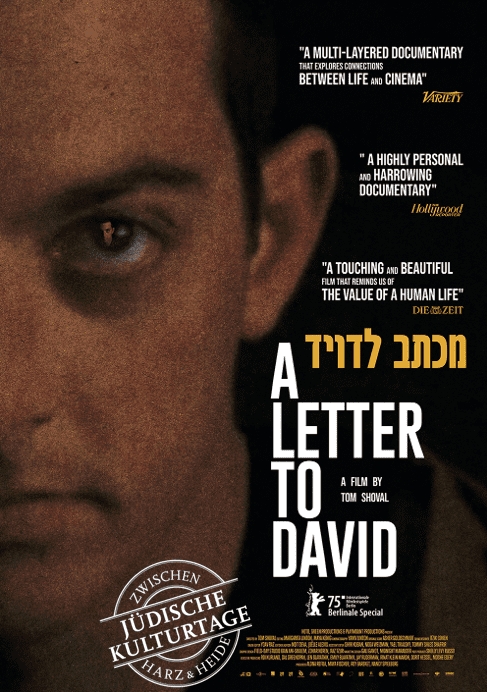
Filmemacher Tom Shoval verfasst einen persönlichen filmischen Brief an David Cunio, der am 7. Oktober 2023 von der Hamas aus dem Kibbuz Nir Oz entführt wurde und seitdem in Gaza als Geisel gehalten wird. Vor zehn Jahren spielten David und sein Zwillingsbruder Eitan die Hauptrollen in Shovals preisgekröntem Debütfilm „Youth“ (Berlinale 2013), der die starke Bindung zwischen Brüdern thematisierte und – in einer tragischen und unvorstellbaren Wendung des Schicksals – eine Entführung zum Thema hatte. Anhand von unbearbeitetem Filmmaterial hinter den Kulissen und Casting-Videos von „Youth“ erschafft Shoval einen vielschichtigen Dokumentarfilm, der die unerklärlichen Zusammenhänge zwischen Leben und Kino, Erinnerung und Realität sowie die katastrophalen Folgen des Krieges erforscht.
Die Veranstaltung ist kostenfrei – Über Spenden würden wir uns freuen.
Diese Veranstaltung ist Teil der Jüdischen Kulturtage zwischen Harz und Heide 2025.
Short movie "Sevap/Mitzvah" tells the story of a Muslim woman, Zejneba Hardaga, from Sarajevo, who risked everything to save the Kabiljo family, her Jewish friends, during World War II in Nazi-occupied Bosnia and Herzegovina. During the aggression against Bosnia and Herzegovina, 50 years later, the Kabiljo family rescues Hardaga family from besieged Sarajevo.
Director and screenwriter: Sabina Vajrača
Panel Discussion "Friendships in the Age of Evil"
Participants: Vladimir Andrle, Damir Lajoš and Vasilije Vranić
Moderator: Marija Čer-Krnjaić
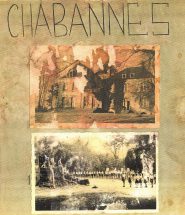
Dans le cadre des Journées européennes du patrimoine
États‑Unis, documentaire, 91 min, 1999.
Ce film raconte comment les habitants de Chabannes, un minuscule village de la France non occupée, ont préféré l’action à l’indifférence et ont sauvé la vie de 400 enfants juifs réfugiés pendant la Seconde Guerre mondiale. On replonge avec certains acteurs de ce sauvetage, à travers des interviews intimes d’historiens, d’enseignants, d’employés de l’OSE et d’« enfants » de Chabannes, dans les joies et les peurs de la vie quotidienne pendant la guerre.
Dans l'auditorium Edmond J. Safra, en présence des réalisateurs.
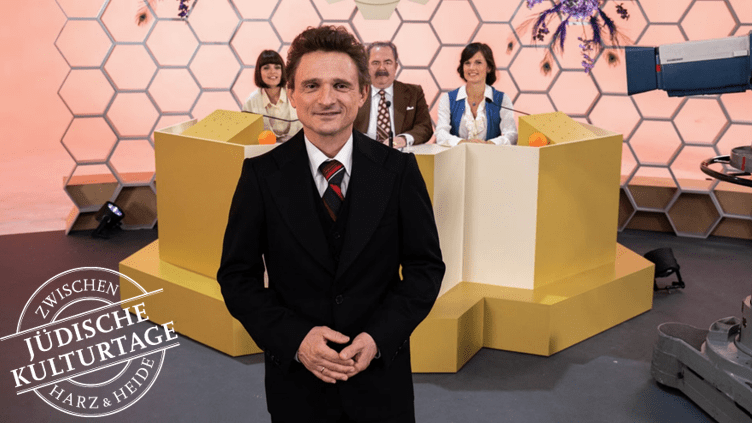
Der Film „Rosenthal“ erzählt die bewegende Geschichte von Hans Rosenthal (1925–1987), einem der bekanntesten Entertainer Deutschlands.
Auf dem Höhepunkt seiner Karriere bei Dalli Dalli soll Rosenthal die 75. Sendung moderieren. Diese fällt jedoch ausgerechnet auf den 9. November 1978 an dem die Bundesrepublik zum ersten Mal mit einer offiziellen Gedenkveranstaltung an die Reichspogromnacht vom 9. November 1938 erinnern will. Für den jüdischen Holocaustüberlebenden Hans Rosenthal ist es undenkbar an dem Tag eine Ablenkungssendung zu machen, aber eine Verschiebung wird vom ZDF abgelehnt. Das stürzt Rosenthal in tiefe Selbstzweifel und innere Zerrissenheit.
Basierend auf wahren Begebenheiten wurde das Drama „Rosenthal“ zum 100. Geburtstag des Entertainers produziert (Oliver Haffner mit Florian Lukas und Claude Heinrich).
Eintritt frei
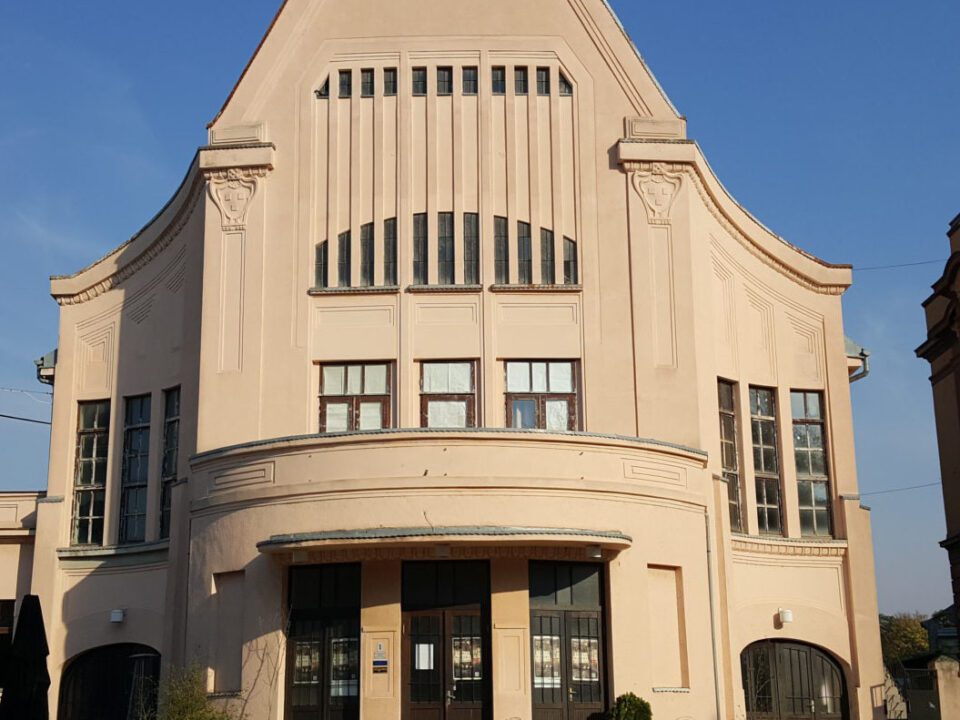
Director and screenwriter: Sanela Prašović Gadžo
The film is a historical story about Sarajevo and the tragic events during World War II through the life of a girl who survived the Holocaust. Mrs. Erna Estera Kaveson Debevec is now 91 years old and lives in Sarajevo. The film was shot on location in Bosnia and Herzegovina, Croatia and Italy.
In cooperation with "La Benevolencija", Jewish humanitarian organization based in Sarajevo.
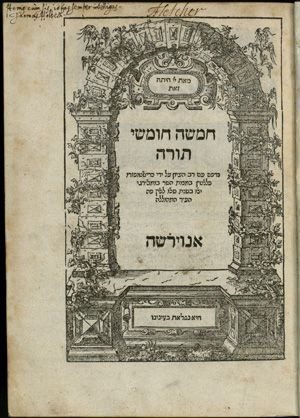
Pending permission of Dr. Theodor Dunkelgrün and the Institute of Jewish Studies, University of Antwerp.


1) 14h00 : Alfred et Lucie Dreyfus, je t’embrasse comme je t’aime (57 mn – 2022)
Un film écrit et réalisé par Delphine Morel.
Victime d’une effroyable machination, le capitaine Dreyfus est condamné en décembre 1894 à la déportation pour haute trahison. Avant son départ au bagne, sa femme Lucie passe un pacte : vivre à tout prix, jusqu’à sa libération. Elle est soutenue dans ce combat par Mathieu Dreyfus, qualifié de “frère héroïque” par Emile Zola, qui se dévoue pendant toute l’affaire pour la réhabilitation de son cadet.
Pendant cinq années, les époux Dreyfus échangent des centaines de lettres, qui mettent des mois à parvenir à leur destinataire, mais qui sont une arme de survie pour Alfred. En violation des droits du détenu, ces lettres sont analysées, censurées, recopiées, non remises.