
Opening and guided tour of the exhibition.
As part of the European Days of Jewish Culture, the Interpretation Center of the Jewish Community presents, during the month of September, the exhibition The Portuguese Jewish Diaspora, organized by Editorial Chandeigne and presented in Portugal by Associação Hagadá | Tikva – Jewish Museum Lisbon.
This exhibition tells, over 20 panels, the story of the Portuguese Jewish diaspora in the Sephardic context, still little known, from its origins – the forced conversion of Portuguese Jews in 1497 – to the contemporary reminiscences of Marrano memories and their places of memory, showing it as a Jewish history, but also Portuguese, European and worldwide.
Persecuted by the Inquisition from 1536 onwards, many New Christians left Portugal, looking for a place to practice Judaism more or less freely, having participated, between the 16th and 18th centuries, in the profound socioeconomic, religious and intellectual changes that brought the western world to modernity.
The exhibition shows that, despite the great geographic and religious dispersion of this diaspora, a certain cohesion was preserved, whose unity factors are expressed through language, literature, liturgy, architecture, patronymics or even funerary art. Although composite, it shares a common destiny that will give rise to a new form of collective belonging, designated by the term «the Nation».

Opening and guided tour of the exhibition.
As part of the European Days of Jewish Culture, the Interpretation Center of the Jewish Community presents, during the month of September, the exhibition The Portuguese Jewish Diaspora, organized by Editorial Chandeigne and presented in Portugal by Associação Hagadá | Tikva – Jewish Museum Lisbon.
This exhibition tells, over 20 panels, the story of the Portuguese Jewish diaspora in the Sephardic context, still little known, from its origins – the forced conversion of Portuguese Jews in 1497 – to the contemporary reminiscences of Marrano memories and their places of memory, showing it as a Jewish history, but also Portuguese, European and worldwide.
Persecuted by the Inquisition from 1536 onwards, many New Christians left Portugal, looking for a place to practice Judaism more or less freely, having participated, between the 16th and 18th centuries, in the profound socioeconomic, religious and intellectual changes that brought the western world to modernity.
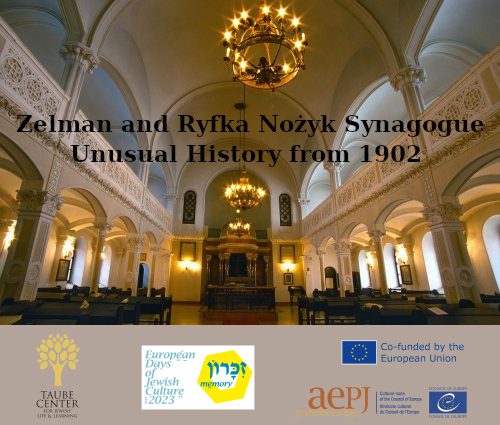
The Professor Moses Schorr Foundation is about to celebrate its 20th anniversary. Our celebration aims to highlight the story of the Ryfka and Zelman Nozyk Synagogue, the sole synagogue in Warsaw that survived the war. We would like to invite you to an exhibition titled “The History of the Nozyk Synagogue.”
Up until now, the early history of the synagogue, starting from its establishment in 1902, has remained largely unexplored. Furthermore, many historians have inaccurately noted the date of Zelman Nozyk’s death, the synagogue’s founder. Over the past two years, we have dedicated our efforts to researching the synagogue’s history, and during Shavuot 2022, we shared some of our findings with members of the Warsaw Jewish Community.
Our objective is to rekindle the memory of the founder, the members, rabbis, cantors, and the diverse range of religious and social activities the synagogue was involved in.

“Sterne ohne Himmel” – Kinder im Holocaust
Die Ausstellung gibt einen Einblick in das Schicksal von Kindern während des Holocaust. Zeichnungen, Gedichte und Briefe belegen die Fähigkeit der Kinder, an der Macht des Lebens festzuhalten und der sie umgebenden Realität mit Kreativität, Phantasie und Optimismus zu begegnen.
Öffnungszeiten:
Dienstag bis Sonntag 11 Uhr – 17 Uhr
Kreismuseum Peine. Der Eintritt ist frei.
Die Veranstaltung ist Teil der vom Israel Jacobson Netzwerk für jüdische Kultur und Geschichte e.V. organisierten 4. Jüdischen Kulturtage zwischen Harz und Heide.

Gekommen, um zu bleiben? Jüdische Migranten aus Osteuropa im Braunschweiger Land
Sie kamen aus Osteuropa in die Region Braunschweig. Hinter ihnen lagen Erfahrungen von Armut, Krieg und staatlicher Neuordnung – von unsicheren Zeiten im Umbruch. Es waren jüdische Einwanderinnen und Einwanderer aus Osteuropa, die in der Zeit um den Ersten Weltkrieg nach einer neuen Heimat suchten und zum Beispiel in Peine eintrafen. Bald stellten sie in den Städten einen großen Teil der jüdischen Bevölkerung. In der Region Braunschweig angekommen, wurden sie immer wieder angefeindet. Ihr rechtlicher Status war ungesichert. Viele von ihnen waren staatenlos. Die Mehrzahl konnte trotz der Umstände ihren Lebensunterhalt bestreiten und bemühte sich um die Schulbildung der Kinder. In den Tageszeitungen wurden kontroverse Debatten über die Migrantinnen und Migranten geführt.
KONZERT MIT DEM DUO ENOSCH
ETJK 2023, am Sonntag, den 3. September, um 15.30 Uhr
unter dem Motto: MEMORY
Ausstellungshalle Marlis E. Glaser
Biberacherstr. 19, 88448 Attenweiler
Noga Sarai Bruckstein und Emilia Lomakova aus Berlin mit Geige, Cello, Klavier und Gesang. Lieder zu Psalmen und Gebeten, sowie Stücke von vergessenen Komponisten.
-KUNST-AUSSTELLUNG
Von Marlis E. Glaser. Als Gäste: Joshua Glaser, Attenweiler, Angela Stiegler
und Samuel Fischer-Glaser, München.
-MODERATION UND LESEN VON TEXTEN als Bilderläuterungen aus Tora, der jüdischen Literatur und Biografien: Schauspieler und Regisseur Walter Weyers.
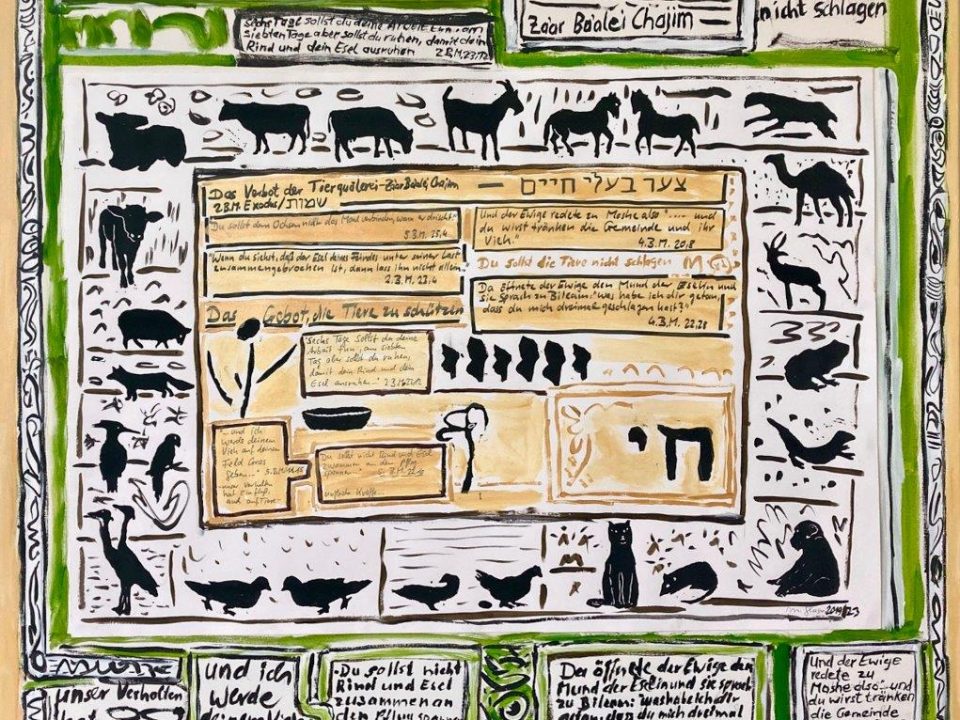
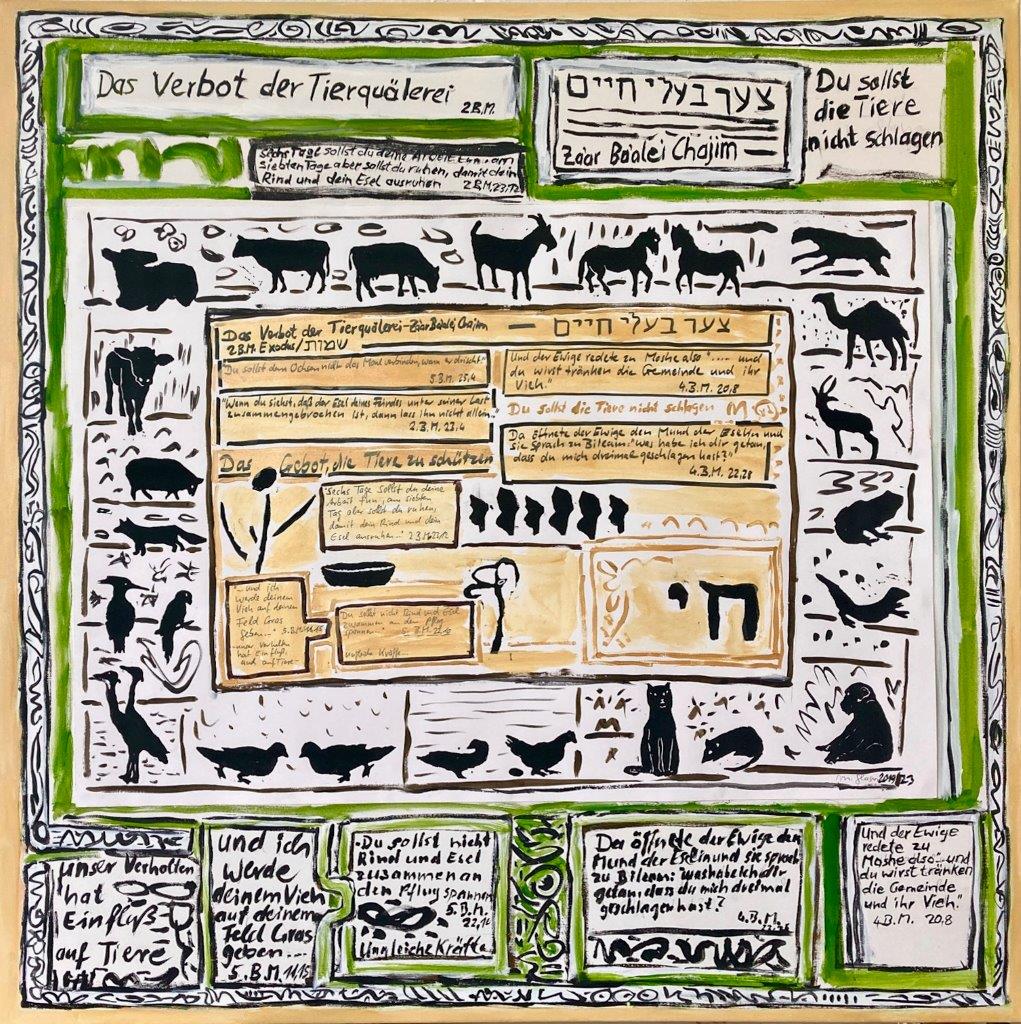
VERANSTALTUNG ZUR JÜDISCHEN GESCHICHTE: PORTRAITS, SYMBOLE ZU FEIERTAGEN, PFLANZEN UND TIERE AUS TORA UND LITERATUR.
In bildlichen und ethischen Zusammenhang gesetzt, begonnen 2004 mit dem Kunst-Projekt „Abraham aber pflanzte einen Tamariskenbaum“. Malerei, Zeichnung und Linoldruck; integriert: Zitate aus der Tora, den 5 Büchern Mose.

Keep the memory of the daredevils who rose up in the Bialystok Ghetto 80 years ago, and join us as we pay homage to their bravery and resilience. You are invited to a captivating exhibition that will show you defining moments of history, showcasing unique photos from the period of 1941 – 1943 in Bialystok.
Our carefully curated program promises an enriching experience:
🕔 17.00: Engage with Bartek Samarski, a passionate member of the Association of the Museum of Bialystok Jews, as he unveils the untold stories of life in the Bialystok ghetto. Delve into the historical archives for a truly enlightening lecture.
🕔 17.20: Discover the remarkable life of Szymon Datner through the heartfelt narration of Dr. Helena Datner (JHI).
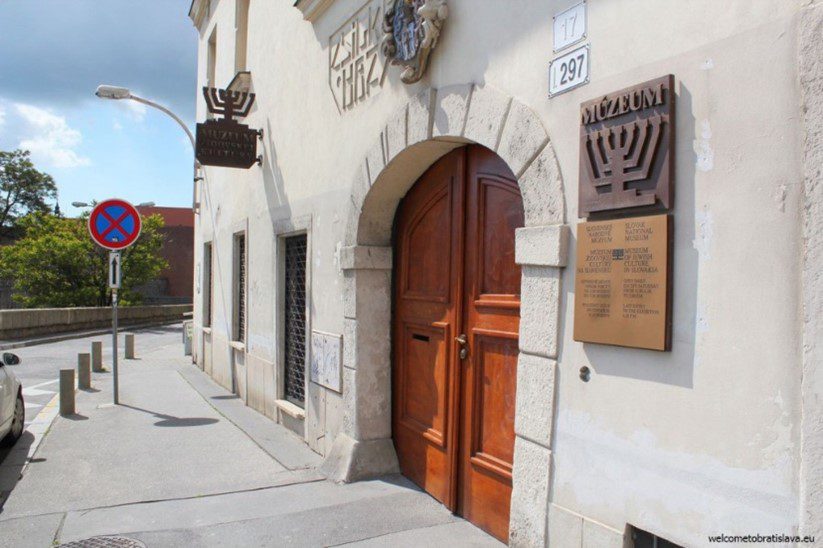
The opening ceremony of the exhibition “Beyond Duty” will take place on September 3, 2023 in the Museum of Jewish Culture of Slovak National Museum.
The exhibition is dedicated to the Diplomats who have been recognized as Righteous Among the Nations for their heroic deeds saving lives during the Holocaust.
Alongside “Beyond Duty”, the exhibition Jewish Swimming Revolution will also be shown. which depicts the successful Jewish swimmers of the origin from Slovakia mostly representing the Maccabea organisation.

This exhibition was produced by the German “Zentrum für Mission und Ökumene der Nordkirche-weltweit”.
On 20 roll-ups pictures and texts provide a good overview of the history of the Jews in German-speaking countries.



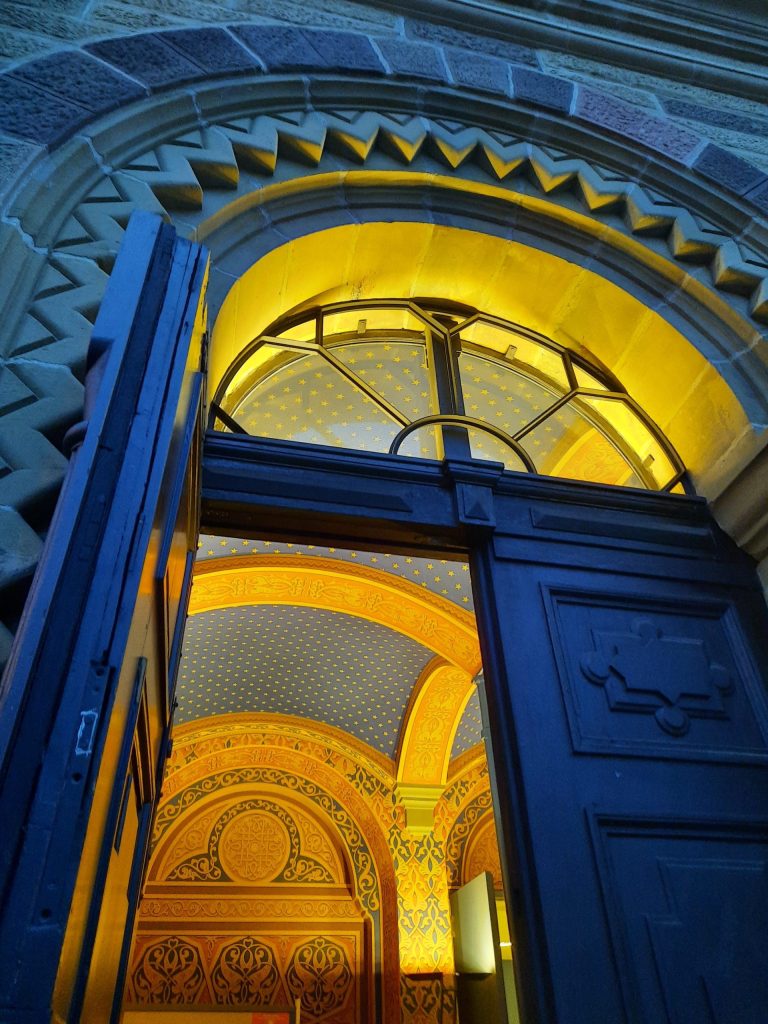

The exhibition, on loan from the National Archives in Prague, presents a collection of extraordinary value, providing a reliable picture of the internal development of settlements and their topography and documenting, among other things, the economic and social state of the Jewish population in the Czech lands.