
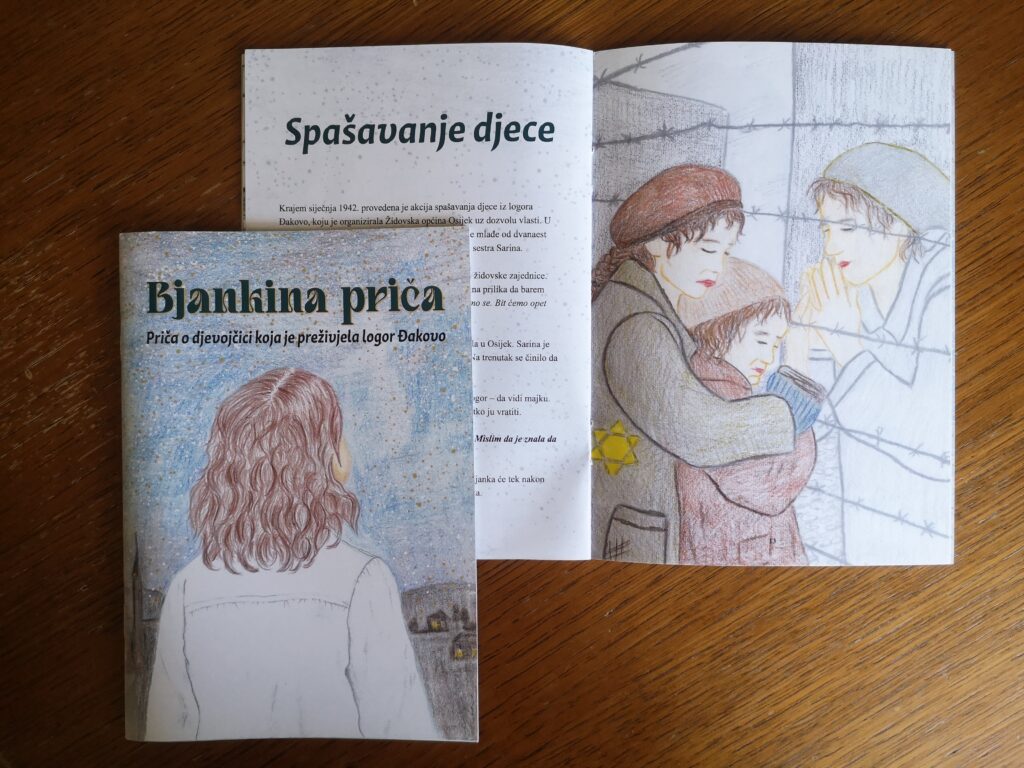
The picture book Bianka’s Story was created with the aim of preserving the memory of Bianka Levi Auslender, a girl from Sarajevo who, during the Second World War, was imprisoned together with her mother, grandmother, and sister in the Đakovo concentration camp. Bianka was the only member of her family to survive the war – her sister was murdered in Auschwitz, while her mother and grandmother were killed and buried in Đakovo under their own names.
Based on Bianka Levi Auslender’s authentic testimony, the picture book presents children and young people with a sensitive and age-appropriate story of a wartime childhood, loss, fear, but also hope, resilience, and the importance of remembrance.
The picture book was created as part of the project Bianka’s Story – A Memory That Teaches Us, through the joint work of students and teachers from Vladimir Nazor Primary School and A. G. Matoš Grammar School in Đakovo. The text was based on research and available testimonies about Bianka’s life and was written by seventh-grade students, while the illustrations were created by students of the Grammar School. The project was conceived and led by teacher Mira Racić and professor Ines Jančula.
In addition to the picture book, the project resulted in a short film of the same title, created by students of the Đakovo Grammar School, with the picture book text serving as the basis for the screenplay.
This picture book is not only a story about one girl and her family. It is also a lasting reminder of the importance of preserving the culture of remembrance, the need to ensure that the voices of children who suffered in wars are not forgotten, and the responsibility we all share in contributing to the creation of a society founded on humanity, tolerance, and peace.
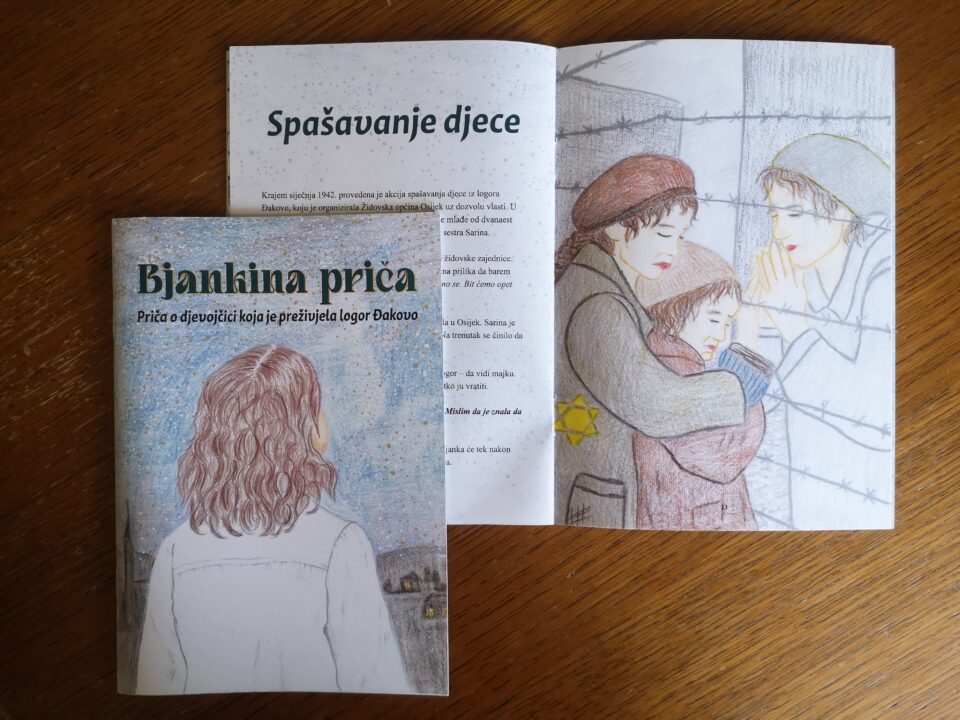
The picture book Bianka’s Story was created with the aim of preserving the memory of Bianka Levi Auslender, a girl from Sarajevo who, during the Second World War, was imprisoned together with her mother, grandmother, and sister in the Đakovo concentration camp. Bianka was the only member of her family to survive the war – her sister was murdered in Auschwitz, while her mother and grandmother were killed and buried in Đakovo under their own names.
Based on Bianka Levi Auslender’s authentic testimony, the picture book presents children and young people with a sensitive and age-appropriate story of a wartime childhood, loss, fear, but also hope, resilience, and the importance of remembrance.
The picture book was created as part of the project Bianka’s Story – A Memory That Teaches Us, through the joint work of students and teachers from Vladimir Nazor Primary School and A.
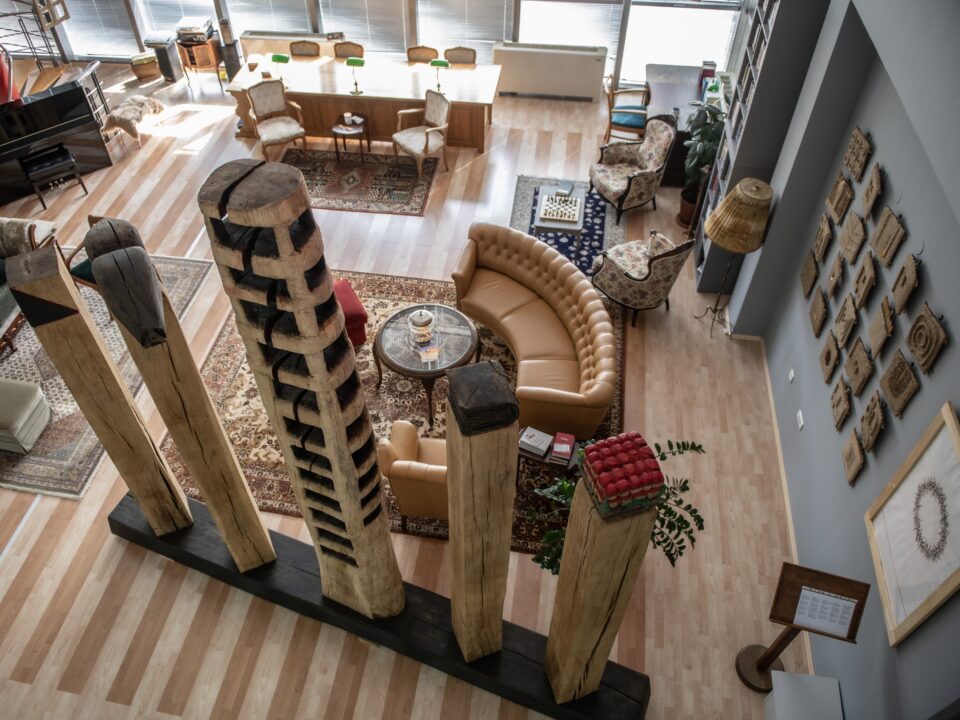
The Jewish Digital Library (Jevrejska digitalna biblioteka) collects, presents, and promotes digital materials that document Jewish historical, religious, and material heritage through written works, audio and video content. Its collections preserve and showcase Jewish tradition, customs, language, culture, art, the everyday life of Jewish communities, and the persecution of Jews, with particular emphasis on the Holocaust.
As part of the Month of Jewish Culture in Osijek, special attention will be given to Croatian authors and publishers, as well as to opportunities for collaboration with Jewish communities, academic institutions, publishers, museums, cultural organisations, and other institutions dedicated to preserving and promoting Jewish heritage. The presentation will also introduce possibilities for including Croatian authors, publications, and documentary materials in the Jewish Digital Library, while encouraging its wider recognition within Croatia's cultural and media landscape.
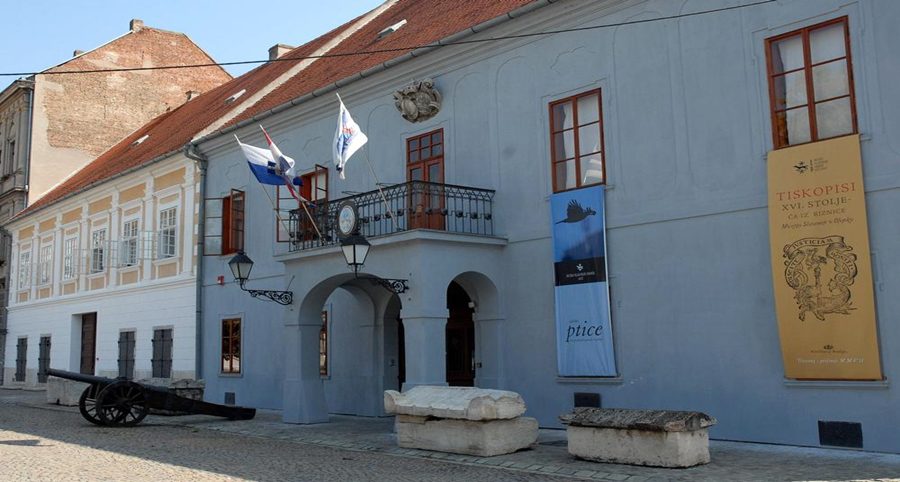
Love, an enduring source of inspiration for both artists and patrons, has given rise to countless works of art. It therefore came naturally to the Museum of Slavonia to draw inspiration from its collections for this year's Month of Jewish Culture, dedicated to the theme of love.
Our contribution to the programme focuses on portraits of three generations of women from the Buchwald and Dixel (Diksel) families. Created during the 1930s, these paintings are the work of three artists who were active in Osijek at the time. Elza Rechnitz painted the portrait of the grandmother, Roza Buchwald (1868–1942); Milan Tolić portrayed the mother, Ella Anita Dixel (1899–?); while Hella Reymann, renowned for her children's portraits, painted the youngest, Anita Marieta Maja Dixel, later Kutin (1925–1977).
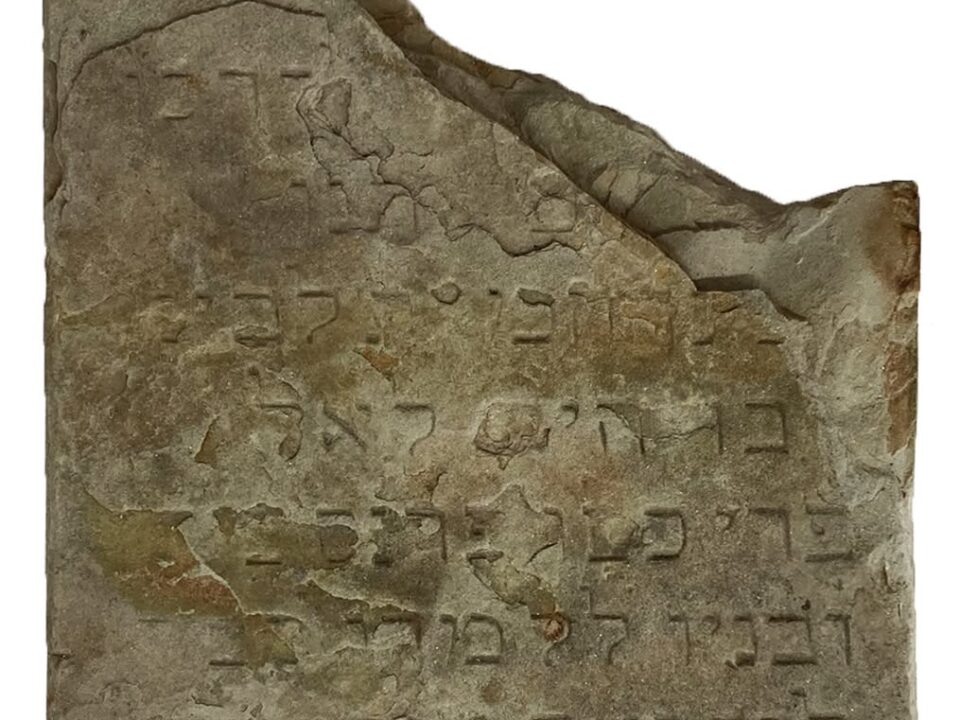
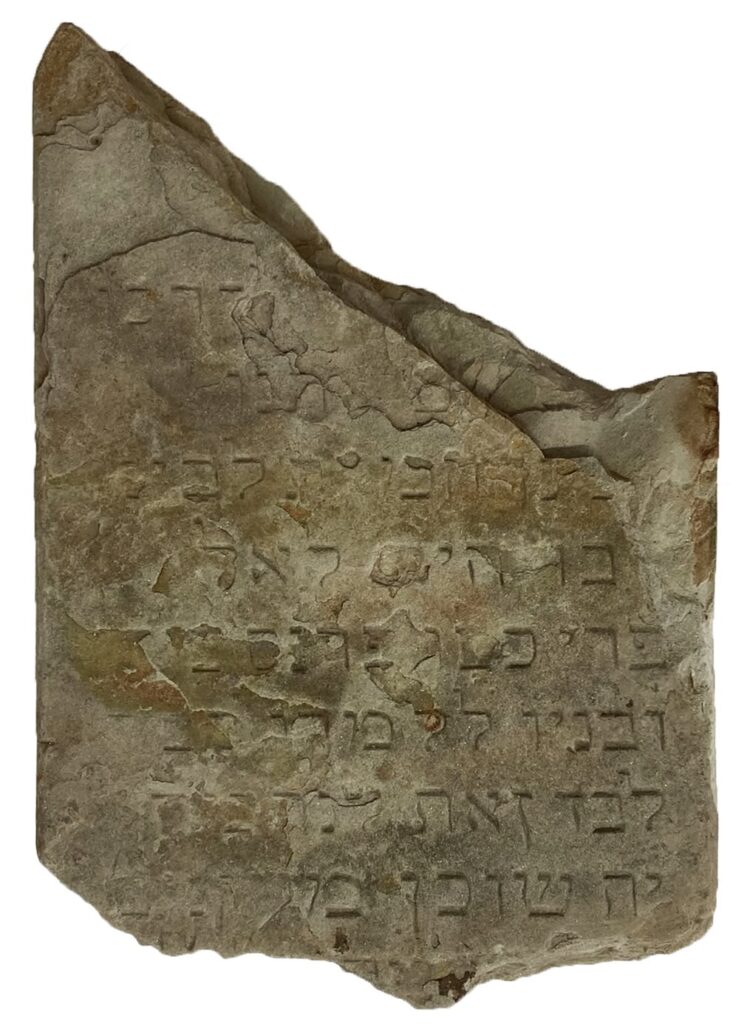
In July 2025, the Pomurje Museum Murska Sobota, under the direction of curator Samo Sankovič, carried out a small-scale rescue archaeological investigation in Murska Sobota prior to the construction of an extension to the Evangelical Centre. The research was commissioned by the Evangelical Humanitarian Organisation Podpornica. Among the finds, which mostly belonged to modern layers dating to the period after the Second World War, a partially preserved Jewish tombstone was discovered.
The event “His Path” (דרכו): Reading a Jewish Epitaph from Murska Sobota will present the reconstruction and interpretation of this partially preserved Hebrew epitaph. Through linguistic and palaeographic analysis, the damaged inscription makes it possible to identify key elements of the deceased person’s life, his role within the Jewish community, and the religious and cultural context in which the inscription was created.
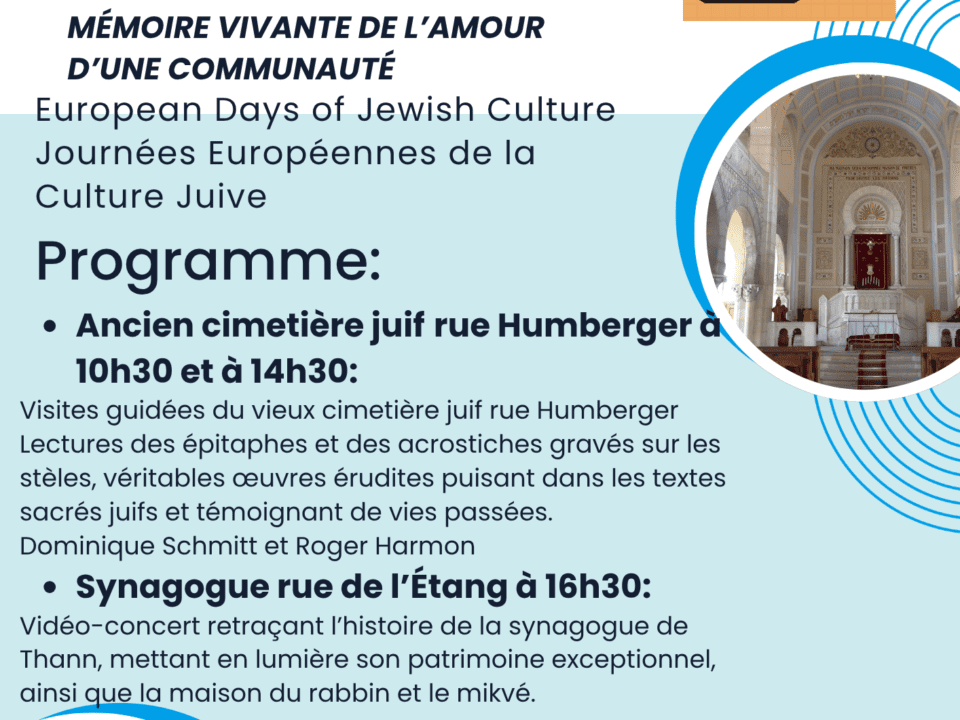
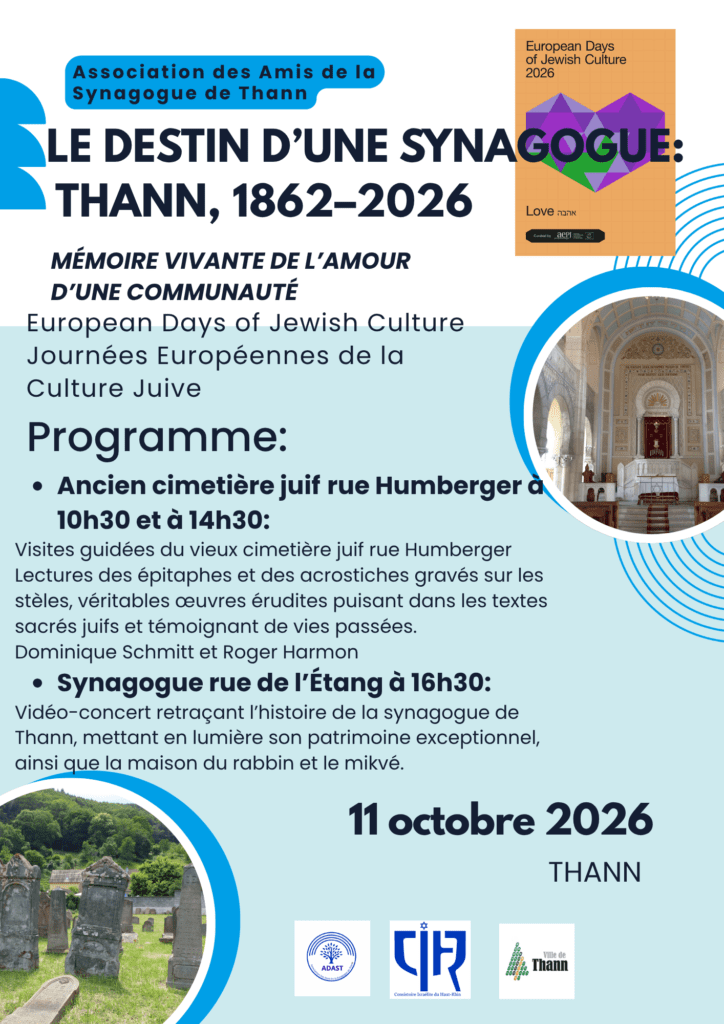
A CHERISHED SYNAGOGUE
THANN, 1866–2026
THE VIBRANT LEGACY OF A COMMUNITY
Located at the heart of Thann, the synagogue has stood for over a century, its presence largely overlooked behind a modest façade. Despite its discreet profile, the building, with the Rabbi’s house and the “mikwe” are of historical significance, closely linked with the development of the town.
For more than a decade, a constant collective effort has been dedicated to the maintenance and renewal of this heritage site. The” Association Des Amis de la Synagogue de Thann”—a secular, community-based organization—brings together local residents, descendants of the former Jewish community, volunteers, skilled craftspeople, and heritage professionals around a shared objective: restoring the synagogue to its former vitality. Beyond material, salvage the project seeks to safeguard and secure a collective memory, specifically that of a historic Jewish community that was fully integrated into the town of Thann’s economic and social fabric.
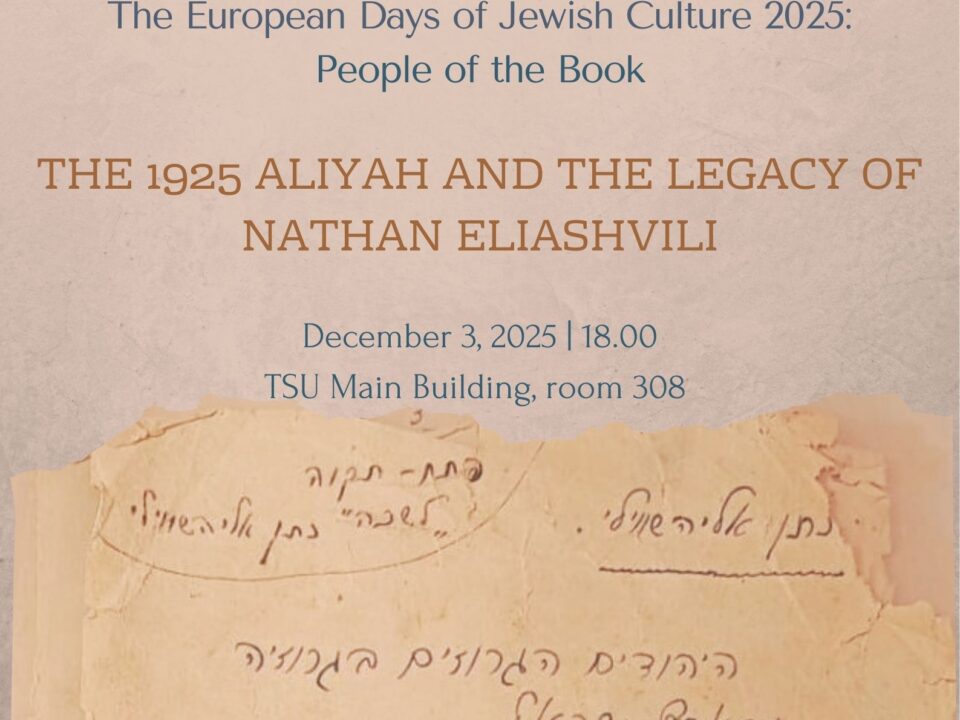
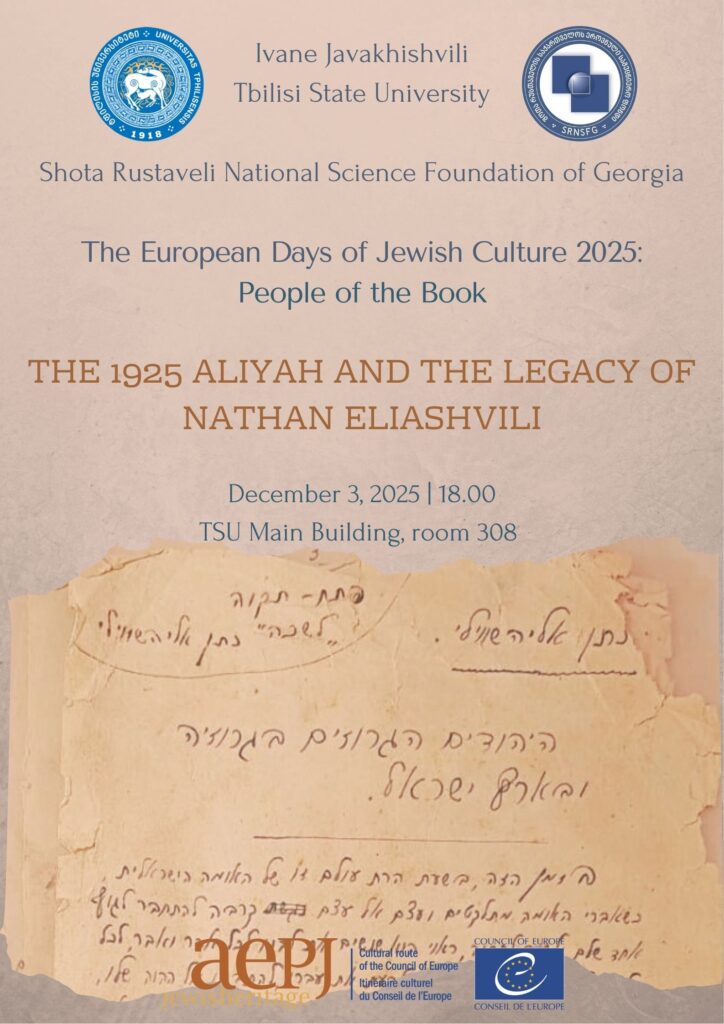
Ivane Javakhishvili Tbilisi State University
The European Days of Jewish Culture 2025: People of the Book
December 3, 2025 | 18.00
The Institute of Cultural Studies at Ivane Javakhishvili Tbilisi State University cordially invites you to a
special event held within the framework of the European Days of Jewish Culture 2025: People of the
Book.
The event will feature two public lectures developed as part of the research project “Jewish Identity in
Georgia: The Soviet Transformation (1921–1941),” funded by the Shota Rustaveli National Science
Foundation of Georgia.
The lectures are dedicated to the 100 th anniversary of the 1925 Aliyah from Georgia to Eretz Israel and
honor the legacy of its leader, Nathan Eliashvili.
Event’s program:
Dr. Lela Tsitsuashvili
The European Days of Jewish Culture 2025: ‘People of the Book’ – An Introduction and its Significance.
Georgian National Museum
Shalva Amiranashvili Georgian State Museum of Fine Arts
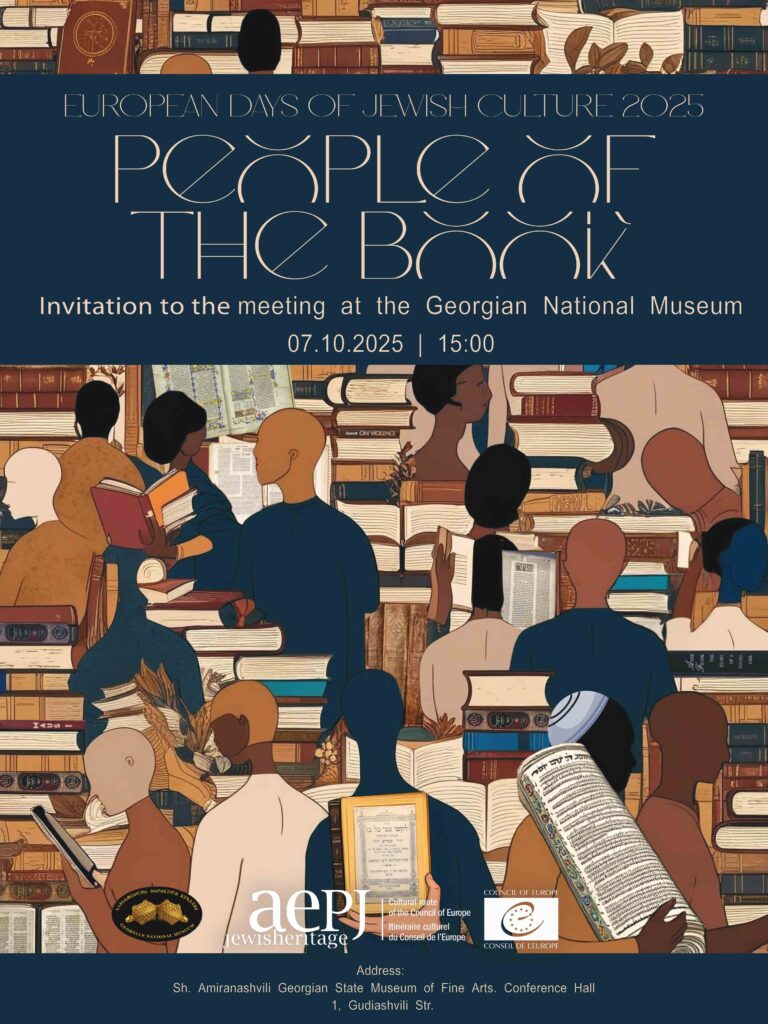
“European Days of Jewish Culture 2025
PEOPLE OF BOOK”
07/10/2025. 15:00
Georgian National Museum invites you to the Shalva Amiranashvili Georgian State Museum of Fine Arts for the meeting: “European Days of Jewish Culture 2025. PEOPLE OF BOOK”.
Event’s program:
• Greetings of the Georgian National Museum Deputy Director Nika Akhalbedashvili;
• Introduction about the European Days of Jewish Culture 2025 celebrating "People of Book" and its importance;
• Welcoming special honorable guest from Israel, Professor of Tel Aviv University Dodo Chikvashvili;
• Prof. Dodo Chikvashvili, lecture "Genetic connection of different Jewish groups”;
• Prof. Lela Tsitsuashvili, presentation “Jewish Collections of the Georgian National Museum”.
In the conference hall will be displayed a photo exhibition from the Jewish Collections of the Georgian National Museum and the Jewish Museum’s photo archive – old photos of the end of 19th first half of 20th century.
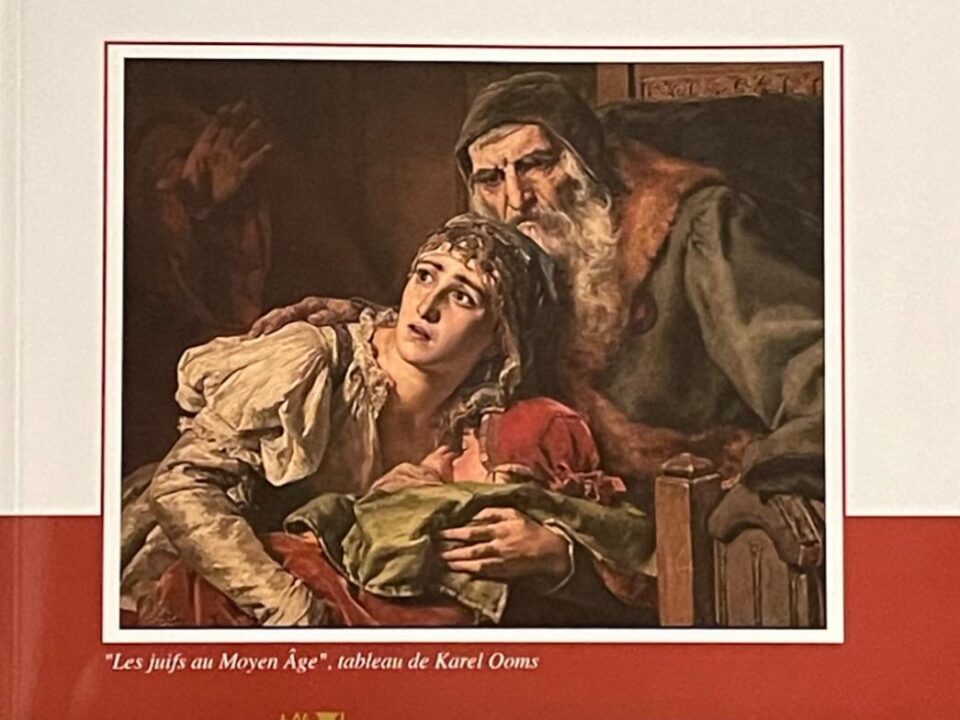
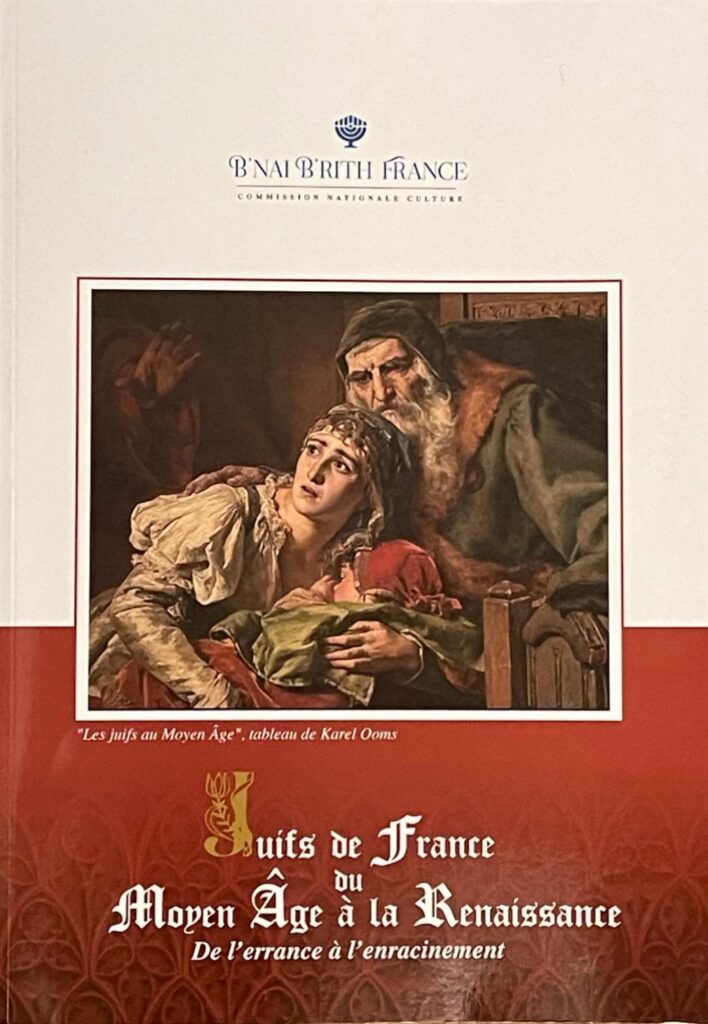
Dans le cadre des Journées Européennes de la Culture Juive, Claire Rubinstein de la Commission nationale Culture du B’NAI B’RITH France vous invite à une réunion Zoom
Jeudi 23 octobre à 19h30
Présentation de l’ouvrage « Juifs de France du Moyen-Âge à la Renaissance de l’errance à l’enracinement »
Participer à la réunion Zoom grâce au lien suivant
https://us06web.zoom.us/j/84190855064
ID de réunion: 841 9085 5064
Code secret: 971515
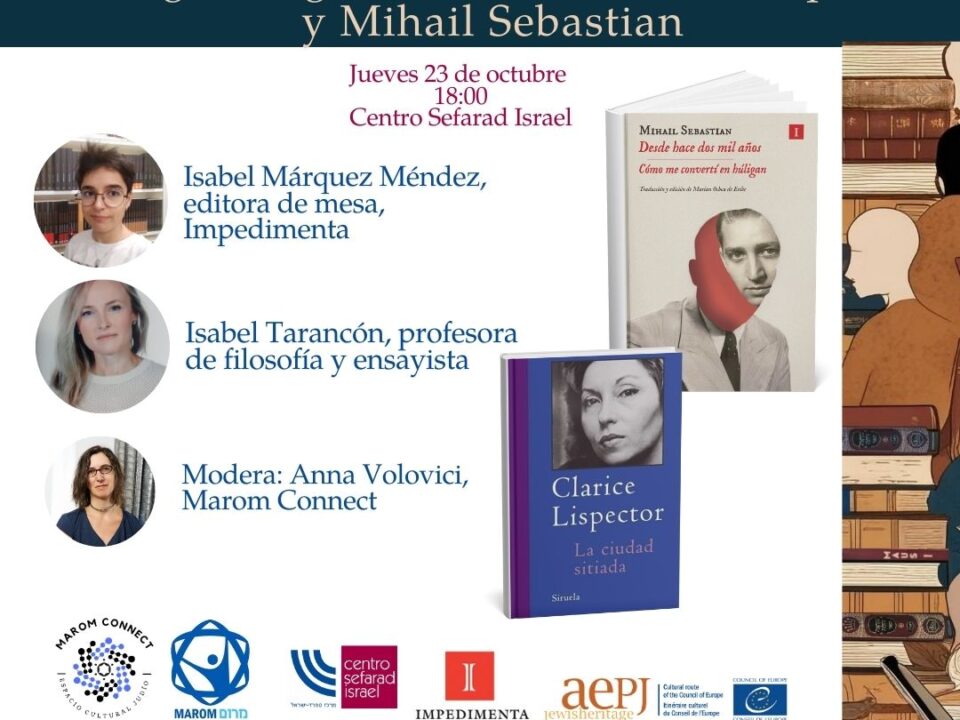
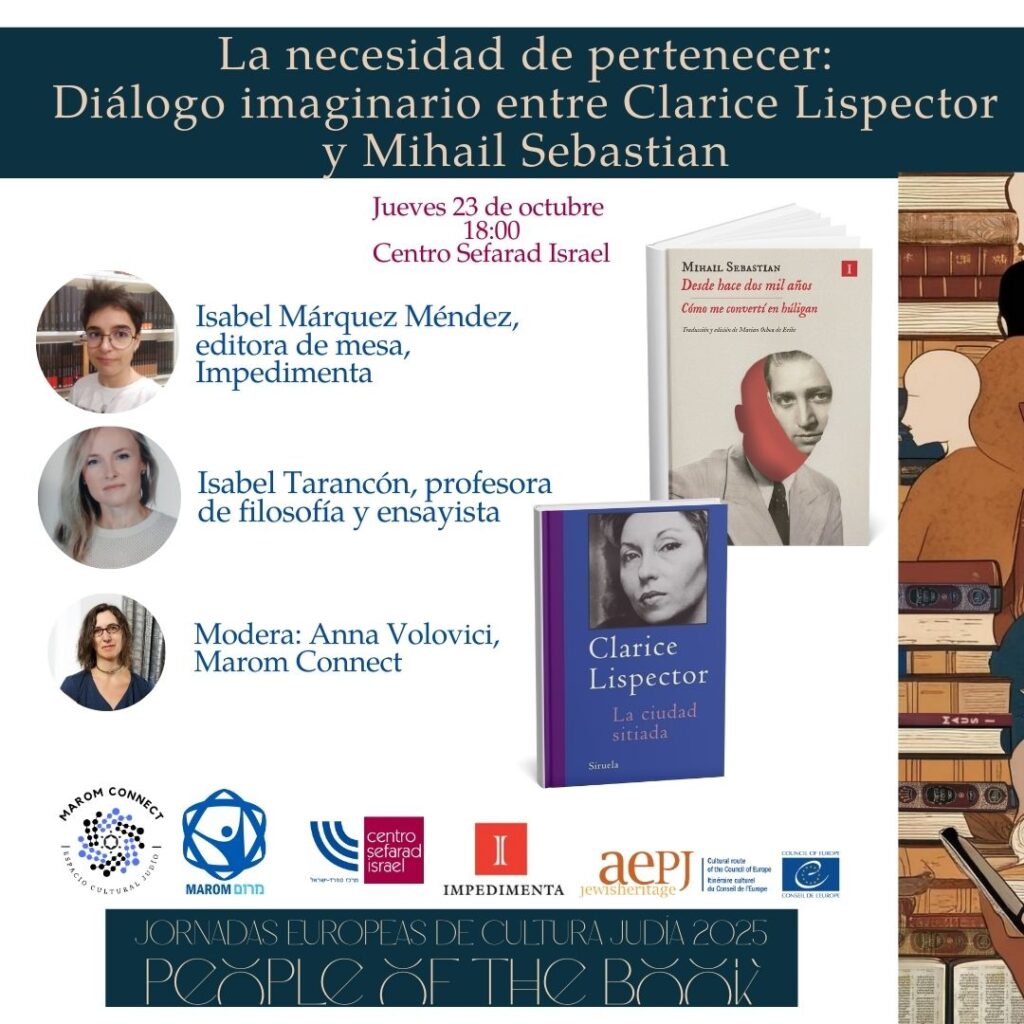
En el marco de las Jornadas Europeas de la Cultura Judía, dedicadas este año al tema El Pueblo del Libro, Marom Connect —plataforma cultural que difunde y conecta proyectos vinculados al judaísmo en español—, en colaboración con la AEPJ (European Association for the Preservation and Promotion of Jewish Culture and Heritage), invita a una tarde literaria en torno a dos autores esenciales: Mihail Sebastian y Clarice Lispector.
La editorial Impedimenta acaba de publicar nuevas traducciones de dos obras fundamentales del escritor judío rumano Mihail Sebastian: “Desde hace dos mil años” y “Cómo me convertí en Húligan”. La editora Isabel Márquez Méndez presentará la obra de este autor singular y explicará qué ha motivado a la editorial a recuperar esos textos, marcados por la experiencia directa del antisemitismo en la Europa de entreguerras.